
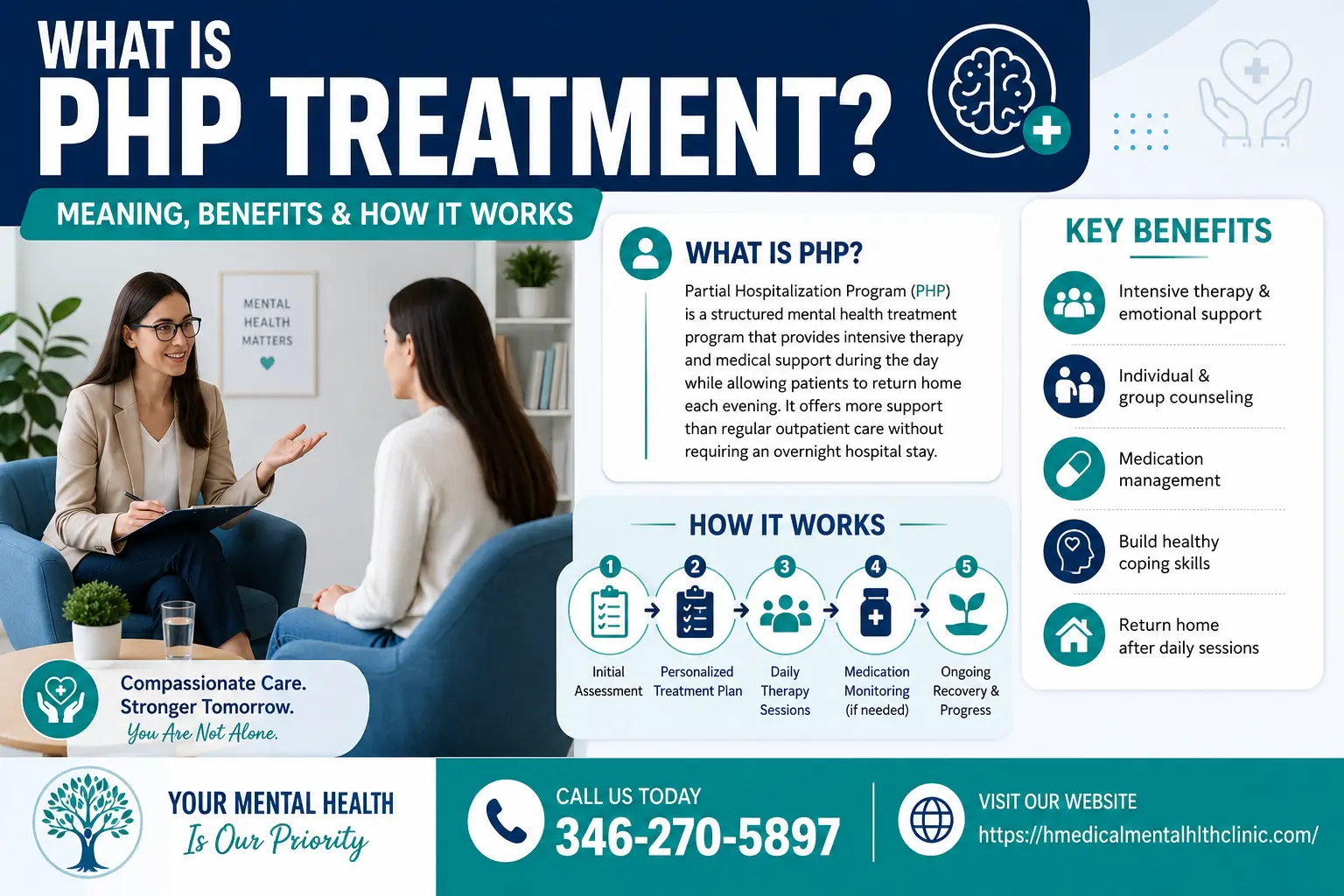
What Is PHP Treatment? Meaning, Benefits, and How It Works
Partial Hospitalization Program (PHP) treatment is a highly structured outpatient option for people dealing with mental health or substance use challenges. It sits between inpatient hospital care and traditional outpatient therapy—offering a full day of intensive support, but without requiring an overnight stay.
This article is your roadmap to understanding PHP: what it means, who it’s for, the structure, and why it works. We’ll walk through daily routines, core therapies, conditions treated, eligibility, and how PHP fits into broader recovery options. By the end, you’ll know whether PHP might be a good fit and what to expect from this level of care for mental health or addiction recovery.
PHP Treatment Meaning and the Partial Hospitalization Program Explained
PHP stands for Partial Hospitalization Program. Think of it as a “day hospital” that gives you the support and clinical attention of inpatient care, but still lets you sleep at home. It’s not just “partial” in the sense of commitment—it’s partial because it blends two worlds: daily, structured care with the flexibility and normalcy of managing your life outside the hospital.
PHPs have become a widely accepted form of behavioral health care in the United States, especially for those who need more support than regular outpatient therapy but don’t require 24/7 hospitalization. Common misunderstandings: PHP doesn’t mean “just part of a treatment” or some watered-down version of rehab. It’s actually a robust, evidence-based option often used as a step down from inpatient stays, or as an alternative when symptoms are too severe for weekly therapy alone.
PHPs began in the mid-20th century as a way to safely transition patients out of hospitals sooner and provide cost-effective, intensive treatment without isolation. Today, they’re vital for bridging gaps between crisis care and “real life,” providing everything from medication management to group and individual therapy, psychoeducation, and skill building. If you hear someone say “I’m in PHP,” it means they’re taking recovery seriously—and getting expert support every weekday, but still returning home each night.
Definition and Core Components of a PHP Program
- Structured Daily Schedule: PHPs run 5-7 hours per day, typically five days a week. Patients attend on a set schedule, much like a school or workday, ensuring routine and predictability.
- Multidisciplinary Treatment Team: Care is provided by a team of professionals—psychiatrists, therapists, nurses, social workers—who collaborate on your treatment and monitor your progress.
- Individualized Treatment Plans: Every participant receives a custom plan tailored to their unique diagnoses, strengths, and recovery goals. Plans are frequently reviewed and adjusted for progress.
- Evidence-Based Therapies: Core programming includes proven approaches like cognitive behavioral therapy (CBT), dialectical behavior therapy (DBT), group therapy, and psychoeducation for symptom management and skill-building.
- Medication Management: Psychiatric evaluation and ongoing medication monitoring are standard. Adjustments are made as needed by prescribing professionals.
- Peer Support and Group Sessions: Participants benefit from group therapy, process groups, and skill-building workshops to foster connection and learning from others in recovery.
- Family Involvement and Education: Many PHPs include family therapy or sessions designed to educate and involve loved ones in the recovery process.
- Access to Crisis Support: If someone’s symptoms escalate, rapid intervention is available—sometimes including a direct pathway to inpatient care if necessary.
These elements, together, distinguish PHP as a comprehensive and adaptable level of care—bridging hospital-level oversight with the realities and freedoms of daily living.
How PHP Treatment Structure Supports Lasting Recovery
Many people wonder why PHP is set up the way it is. The answer is pretty simple: recovery doesn’t just happen in isolation or behind locked doors—it comes from practicing new skills and building confidence while still connected to real life. PHP offers what folks need most: a dose of serious support and a pinch of normalcy mixed together.
By treating people during the day and sending them home each night, PHP lets them apply what they learn in therapy to actual life situations, right away. This setup helps build resilience—not just for the patient, but for their family too. People work through struggles in a protected environment and then immediately take those lessons home, so there’s no huge gap between treatment and “real world.”
It’s not just about surviving a tough week. The daily structure in PHP means you get repeated, regular chances to practice coping, communication, stress management, and relationship skills, with feedback every step. The system is designed for steady personal growth while maintaining community and family ties. The following subsections will break down what a typical day looks like and the therapeutic approaches that work so well in this setting.
PHP Daily Schedule and Treatment Program Format
- Morning Check-In: Each day usually begins with a group check-in, allowing everyone to share updates, set intentions, and discuss overnight challenges.
- Therapy Sessions: Mornings and afternoons include a mix of group therapy, individual sessions, and psychoeducation classes focused on managing symptoms, building skills, and processing personal struggles.
- Lunch/Breaks: Midday breaks and a provided or BYO lunch give everyone a chance to rest, recharge, and socialize in a relaxed—but still supportive—environment.
- Skill-Building Activities: Some programs add workshops or activities (like mindfulness, art therapy, or stress relief exercises) to help develop coping skills and life balance.
- Daily Wrap-Up: Before you head home, there’s usually a closing group to reflect on the day, discuss any obstacles, and plan for evening and home life.
Typical hours are about 9 a.m. to 3 p.m., five days a week, but times may vary. This format supports intensive care without taking you completely away from daily responsibilities.
Therapeutic Approaches and Skill-Building in PHP
- Cognitive Behavioral Therapy (CBT): CBT helps participants identify and challenge unhelpful thinking patterns that fuel symptoms of depression, anxiety, or addiction. You learn practical ways to interrupt negative cycles and replace them with healthier behaviors.
- Dialectical Behavior Therapy (DBT): This approach dives into emotion regulation, mindfulness, and crisis coping skills—especially for folks struggling with intense emotions, self-harming urges, or relationship challenges.
- Group Therapy: In small groups, people open up about struggles, get feedback, and practice new skills together. Group sessions help break isolation by connecting participants with peers who “get it.”
- Medication Management: Clinicians keep tabs on how medications are working for symptoms, track side effects, and adjust prescriptions as needed. This medical support is blended into the therapy plan for a full-circle approach.
- Life Skills Training: From building routines and budgeting to conflict resolution and healthy communication, PHPs often teach hands-on skills necessary for success outside of treatment.
By hitting all these angles—emotional, cognitive, social, and practical—PHPs help people build a solid toolkit for facing challenges long after they complete the program.
Conditions Treated in PHP and Who Is a Good Candidate
If you’re wondering whether PHP covers what you or your loved one is experiencing, you’re in the right place. While PHPs are known for treating a broad spectrum of mental health and substance use conditions, not everybody needs (or benefits from) the same level of care. Some people might need more intensive help, while others may start with PHP right away depending on their clinical needs.
Coming up, you’ll find clear lists of the specific diagnoses and challenges that PHP programs support. We’ll also talk about what makes someone a good candidate: the factors clinicians use to decide whether PHP is a suitable next step. If you’re debating whether PHP fits your situation, the next sections will give you the details you need to make an informed decision.
What Mental Health and Substance Use Conditions Are Treated in PHP?
- Depression and Mood Disorders: Major depressive disorder, bipolar disorder, and seasonal affective disorder are commonly treated in PHP, getting more attention than you’d find in weekly therapy.
- Anxiety and Panic Disorders: Generalized anxiety, panic attacks, and social anxiety respond well to structured, daily support and skills training in PHP settings.
- Trauma and PTSD: PHPs often provide trauma-informed care for post-traumatic stress disorder and those struggling with the aftereffects of abuse, accidents, or violence.
- Obsessive-Compulsive Disorder (OCD) and Related Conditions: Exposure therapy, cognitive retraining, and medication together address severe OCD or related repetitive behavior conditions.
- Substance Use and Dual Diagnosis Disorders: PHPs manage addiction to alcohol, prescription medications, or illicit substances—often alongside mental health diagnoses for a comprehensive, coordinated approach (“dual diagnosis”).
- Personality Disorders: Especially borderline personality disorder, which involves emotional instability and risky behaviors that need daily support and skill practice.
- Self-Harming Thoughts or Behaviors: If someone struggles with urges to self-harm or suicidal thinking, PHP offers a safer bridge between the hospital and home.
While PHP can handle a broad mix of conditions—including complex co-occurring struggles—those with uncontrolled psychosis or requiring medical detox may need inpatient stabilization first.
Who Is a Good Candidate for PHP Treatment?
- People Who Need More Than Weekly Therapy: PHP is ideal when outpatient care isn’t enough, but full hospitalization isn’t required.
- Safe to Return Home Evenings: Candidates don’t need round-the-clock supervision or urgent hospital care; home is a safe environment.
- Motivated for Recovery: Individuals are willing to attend therapy daily, participate in groups, and work toward recovery goals.
- Willing to Engage in Assessments: Suited for those open to psychiatric evaluations, medication reviews, and ongoing progress checks.
- Stable Medical Condition: No acute medical issues that require inpatient care or 24/7 nursing oversight.
Eligibility is determined through a personalized intake assessment, often including mental health and medical evaluations to find the right fit.
Key Benefits of Participating in a Partial Hospitalization Program
- Intensive Support Without Overnight Stays: PHP gives you many of the resources of a hospital while letting you sleep at home, so you get the best of both worlds—expert care and home life.
- Comprehensive, Structured Care: With multiple therapies, family sessions, and skill-building, PHP provides a richer, more intensive support system than weekly therapy.
- Access to Medication and Medical Oversight: On-site psychiatric and medical professionals track medication effectiveness and health changes, adjusting care as needed.
- Peer Community and Connection: Daily group sessions foster friendships and accountability, proving you’re not alone in recovery.
- Maintains Real-Life Ties: You can keep up with parenting, work, or school responsibilities—putting new skills to practice right away.
- Family Involvement: Many programs include educational groups and family therapy, strengthening your support system for longer-term recovery.
- Step-Down Flexibility: PHP is a great transition point between inpatient and regular outpatient—making it easier to adjust levels of care as symptoms improve.
- Relapse Prevention Focus: Programs build relapse prevention plans tailored to daily life, not just theory, lowering the risk of setbacks after discharge.
Most importantly, PHP offers hope—a path to healing that’s thorough yet flexible, making it a lifeline for many in need.
Comparison of Treatment Levels: PHP vs Inpatient and Outpatient Programs
- Inpatient Hospitalization: Patients stay at the facility 24/7 for acute stabilization, with constant monitoring and limited outside contact; reserved for severe, high-risk cases.
- Partial Hospitalization Program (PHP): Offers full days of intensive treatment (usually five days a week) but allows patients to go home at night. It balances high support with independence and the ongoing connection to real life.
- Intensive Outpatient Program (IOP): Less time-intensive than PHP; participants typically attend 3-4 hours a day, three to five days a week. Ideal for those stepping down from PHP or needing moderate support.
- Standard Outpatient Therapy: The lowest intensity, with therapy once per week or less. It offers the most flexibility but is best for people with stable symptoms and strong personal resources.
PHP stands out for those whose struggles are too much for regular outpatient support, yet don’t require constant supervision—offering a sturdy bridge to real-world recovery. Choosing the right level depends on symptoms, risk, and daily living needs.
PHP Medication Management and Integrated Medical Support
Medication management is a key part of many PHP programs. Psychiatric professionals evaluate whether medications are needed, handle prescriptions, and check for side effects or changes in symptoms during treatment. They work as part of the treatment team, seamlessly integrating medication plans with therapy and skill-building. This ongoing oversight helps patients get the right mix of treatment for mental health or substance use recovery and gives peace of mind that medical needs are never overlooked in the process.
Can Teens Participate in PHP Programs?
Yes—teens and adolescents can participate in PHP, with most programs specifically tailored for youth. These programs adapt therapy, skill-building, and emotional support for younger participants and always include close safety monitoring. Family involvement is big here, with parent education and regular check-ins as a standard feature. PHP for teens addresses school, family, and relationship challenges and is built around engaging age-appropriate group activities and trauma-informed care. Safety and growth go hand in hand.
What Happens After Completing PHP? Discharge and Recovery Planning
- Step-Down to Intensive Outpatient (IOP) or Outpatient Care: Most people aren’t left hanging—they move on to IOP or standard therapy, maintaining structure at a less intensive pace.
- Aftercare and Relapse Prevention Plans: You’ll work with your care team to outline daily supports, warning signs, and coping strategies for staying on track at home.
- Community Resources and Support Groups: Many PHPs connect graduates with peer support, 12-step programs, alumni networks, or mental health organizations for ongoing encouragement.
- Ongoing Medical or Psychiatric Monitoring: Regular check-ins or medication reviews continue with your provider to help manage symptoms long-term.
- Family and Caregiver Involvement: Discharge planning often includes family education and resources, so everyone knows how to handle bumps in the road or signs of relapse.
Recovery doesn’t end when PHP does—it’s an ongoing process, supported by multiple layers of care and community connections.
Frequently Asked Questions About PHP Treatment
How long does PHP last?
Most folks spend about two to four weeks in PHP, but the timeline depends totally on your progress and individual needs—sometimes longer, sometimes shorter.
Is it covered by insurance?
Yes, many major insurers cover PHP if it’s medically necessary, but verification and possible prior approval are needed. Always ask your provider to check your specific health plan’s benefits and out-of-pocket costs.
Do I need to stay overnight?
No, you go home each day—PHP is all about intensive care with home life in between. Will my family be involved? Often, yes. Family therapy, education, and support groups are common, so loved ones are included in the process.
Is it confidential?
Absolutely. Just like any medical care, your privacy is protected by law—no details are shared without your clear consent.
Is transportation provided?
Some programs help with rides, while others expect patients to arrange their own. It’s a good question for intake staff right at the start.
What if I need help after hours?
Most PHPs provide crisis contacts and clear instructions for off-hours support and emergency situations.