
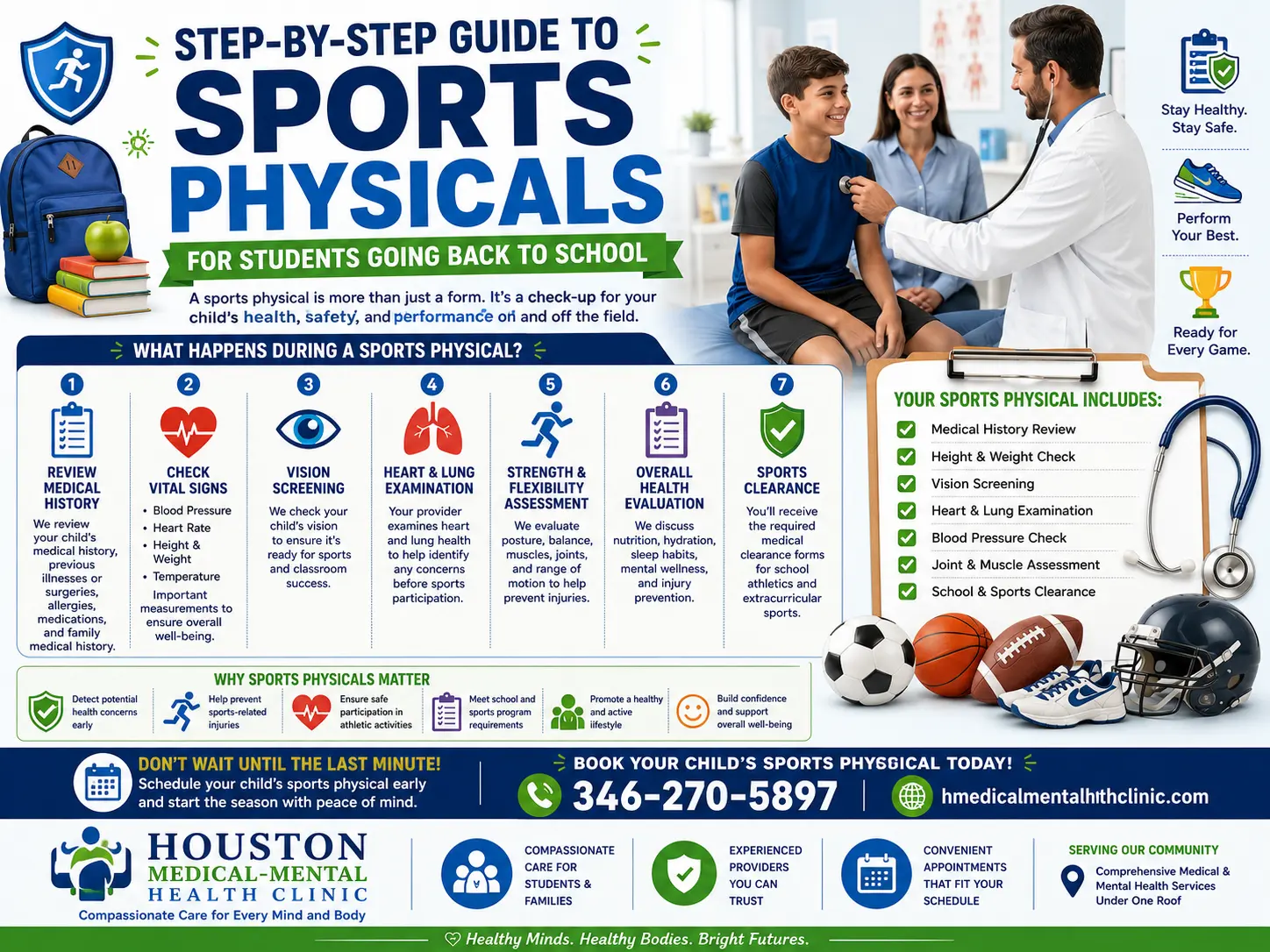
Guide to Sports Physicals for Students Going Back to School
Getting your child ready for school sports is about more than just picking out new sneakers or joining the right team—it starts with a sports physical. This guide is built to walk parents and caregivers through each step, from understanding what exactly a sports physical is, to knowing who needs one, and all the way to preparing for the big day.
We touch on why these exams matter not just for safety, but for your child’s whole well-being. You’ll get a clear view of what happens during the appointment, what to ask, and what forms to bring, especially if you’re in Texas or Houston and considering telehealth. You’ll also find answers to common questions and see practical examples drawn from real-life situations, making sure you’re fully prepared—no confusion or surprises.
Understanding What a Sports Physical Is and Why Students Need One
As each new school year approaches, parents often hear about the “sports physical” requirement. But this checkup isn’t just a formality—it’s a key part of keeping children safe and healthy while they participate in athletics or even camps and organized school activities. The sports physical, sometimes called a pre-participation physical evaluation (PPE), is an exam designed specifically to determine if a student is healthy and ready for physical activity.
Unlike a regular checkup, the sports physical zeroes in on things that matter for athletic participation—looking for past injuries, underlying conditions, or anything that might put a child at greater risk while playing sports. Schools in Texas and beyond require this not to be a headache, but to make sure every child has a green light from a medical professional before joining practices, tryouts, or games.
Whether your student is trying out for their first little league team, jumping into middle school track, or simply going off to camp, the sports physical is a gatekeeper. It helps schools, coaches, and parents work together to protect kids and sets up an open conversation around health, safety, and participation. Up next, we’ll look closer at who exactly needs a sports physical and when it’s required—because not every rule looks quite the same for every family.
Who Needs a School, Sports, or Camp Physical
Any student who plans to join a school sports team, athletic club, or attend a physical activity-based camp usually needs a sports physical. Most schools in Texas require one before a student can start practicing or competing.
Kids entering kindergarten or sixth grade are often due for a physical too, since these are common entry points for higher-risk activities. The requirement can also pop up for students at private schools, those playing in afterschool leagues, or campers. Keep in mind, what your school district or organization asks for—and when—may vary, so check early to avoid last-minute headaches.
Top Benefits of Getting a Sports Physical for Kids
Getting a sports physical isn’t just about ticking off a school requirement—there’s real value behind the tradition. When your child goes in for this exam, you’re giving them a checkup designed to spot health issues early, well before they can become bigger problems on the field or court.
These physicals play an important role in preventive care. They don’t just look at whether kids can participate, but dig deeper into every aspect of their well-being, from growth and nutrition to how well their heart and lungs handle activity. Plus, for parents, there’s a huge relief in knowing you’re sending your child to practice with a clean bill of health, and that your paperwork is up to date with Texas school rules.
This section sets the table for a closer look at how sports physicals support not just safe participation, but overall development, routine health tracking, and peace of mind for the whole family. Next, we’ll explore the holistic wellness possibilities beyond the exam room.
How Sports Physicals Promote Holistic Wellness and Preventive Care
A sports physical checks more than just the basics—it gives a broad snapshot of a child’s health, beyond sports. The exam looks at physical growth, nutrition, heart and lung health, and can even open the door to talking about mental health or emotional stress.
This kind of visit connects you and your child with preventive care strategies, offering early detection for issues like asthma or injury risks. It’s an important step towards keeping the whole child healthy, on and off the playing field.
What Happens During a Sports Physical Exam
Walking into a sports physical, you might wonder what exactly will happen. The process is straightforward but tailored especially for young athletes. From the moment you check in, the goal is to dig into your child’s readiness for physical activity—starting with a good look at their history and wrapping up with hands-on checks of their body’s systems.
Parents can expect a mix of paperwork (lots of questions about medical history and current medications) and the exam itself, which includes everything from measuring height and weight to listening to the heart and lungs. Throughout the visit, the provider is sizing up not only immediate risks but also long-term health and athletic safety.
By the end, families leave knowing what (if anything) needs follow-up, confident their child is ready for safe participation, or aware of what questions still need answers. Up next, we’ll break down what tests and assessments are standard so there are no surprises on exam day.
What Does a Sports Physical Exam Include
- Vital Signs: Blood pressure and heart rate are measured to spot cardiovascular risks early.
- Height and Weight: These basics help track your child’s growth and flag potential concerns.
- Vision Test: Ensures children can see clearly, which is crucial for both safety and athletic performance.
- Musculoskeletal Assessment: Providers check joints, muscles, and posture to catch any injuries or weaknesses that could be a problem in sports.
- Heart and Lung Exam: The doctor listens with a stethoscope for any irregularities that might impact strenuous activity.
How to Prepare Your Child for a Sports Physical
Getting ready for a sports physical is all about preparation—both the paperwork and your child’s mindset. This section will help you avoid rushing around or facing delays by highlighting what you’ll need to bring and how to make the visit feel routine and comfortable for your student.
Kids do best when they know what to expect and aren’t surprised by questions or quick checkups. There are also little things you can do at home—like making sure your child is rested and hydrated—that really set them up for success.
This way, the physical becomes a low-stress, positive encounter that checks all the school, sport, and state requirements. We’ll break down exactly what to gather and tips for talking to your child next.
What to Bring to the Appointment and Your Child’s Physical Today
- Immunization Records: Bring the latest vaccine documentation, since many schools require up-to-date shots for clearance.
- School or Sports Forms: Pre-fill as much as you can of the official school, sport, or camp medical forms required for participation.
- Medical History List: Collect details on allergies, past injuries or illnesses, and details on ongoing medications or supplements.
- Insurance Card: If you plan to bill insurance, having your card on hand can speed things along.
How to Prepare Your Child Physically and Mentally, Including Hydration Tips
- Explain the Visit: Let your child know it’s a routine checkup that just ensures they’re safe to play or participate in activities.
- Promote Good Sleep: Encourage early bedtime the night before for best performance during the exam.
- Hydration is Key: Have your child drink plenty of water before the appointment, as dehydration can affect results.
- Reduce Anxiety: Answer their questions and remind them that the provider is there to help, not judge or criticize.
Questions Parents Should Ask During a Sports Physical Exam
- Are there any health concerns that might limit my child’s participation in sports? This question helps clarify if there are any risks based on the physical findings or your child’s medical history.
- What follow-up, if any, is needed before full clearance is granted? Sometimes further evaluation or a specialist consult may be recommended, and it’s good to know this up front.
- How can we manage my child’s chronic conditions (like asthma, diabetes, or allergies) during practice or games? Providers can offer advice about inhalers, EpiPens, or glucose monitoring and notify coaches as needed.
- What’s your advice for injury prevention and safe play in my child’s specific sport? Asking this question opens a valuable conversation about sport-specific risks, proper equipment, stretching, and rest.
- If my child gets sick, or is recovering from an injury, what’s the process for return-to-play clearance? Knowing this prevents confusion if your child needs a new medical release or extra paperwork down the road.
Finding Sports Physicals for Children Near You and Scheduling Details
When it’s time for that annual sports physical, Texas families—especially in Houston—have more options than ever to get it done conveniently. Local clinics, school-based health centers, urgent care locations, and some pediatric offices offer walk-ins or scheduled visits all summer long. Many places accept insurance and are familiar with the various school, district, and league forms you’ll need.
If you’re looking for even more flexibility, some providers in large cities like Houston now offer telehealth appointments, as long as an in-person exam isn’t strictly required for your child’s sport or school. Setting up an appointment is usually as simple as calling the clinic, using an app, or booking online, with some urgent care centers taking walk-ins for sports physicals evenings and weekends.
The next section covers what to look for in a provider—like insurance acceptance, clinic reputation, and what questions to ask about coverage and paperwork—to keep your out-of-pocket costs low and experience stress-free.
FAQ About Sports Physicals for School-Aged Children
- How often does my child need a sports physical?
Most Texas schools require a new sports physical yearly, but always check your district’s rules. Some camps or leagues may accept one from the past 12 months. - Who is allowed to perform a sports physical?
In most cases, a licensed healthcare provider like a pediatrician, family practitioner, or nurse practitioner can complete a sports physical and sign the appropriate forms. Some schools or districts may have limits on using telehealth for new physicals. - Will insurance pay for the physical?
Many insurance plans treat sports physicals the same as annual well-child checks and will pay for one per year, but if your child gets both a checkup and a sports clearance in a separate visit, there may be a fee. Call your plan to confirm before booking. - What if a concern is found during the exam?
The provider may order further tests, refer your child to a specialist, or put restrictions on certain types of activities. In some cases, paperwork may require a second appointment before full clearance. - Can my child get a sports physical through telehealth?
Some clinics offer partial telehealth options for reviewing medical history and discussing concerns, but most still require an in-person appointment for a full physical exam, especially if the state or school mandates it.