
The Complete Guide to Residential Treatment: Benefits & Works
The decision to pursue recovery from a mental health condition, substance use disorder, or behavioral challenge is one of the most important decisions a person can make. However, choosing from the various treatment options can be quickly overwhelming. Acronyms, clinical slang, and similar terms, like "inpatient" and "residential," are often confusing when clarity is required.
Residential Treatment is one of the most effective, supportive, and transformational levels of care in today's healthcare. Whether it's for you or your loved ones, this guide explains what residential care is, who it's for, how it works on a day-to-day basis, and how to find the best residential care program for you.
What is Residential Treatment? & Who is it for?
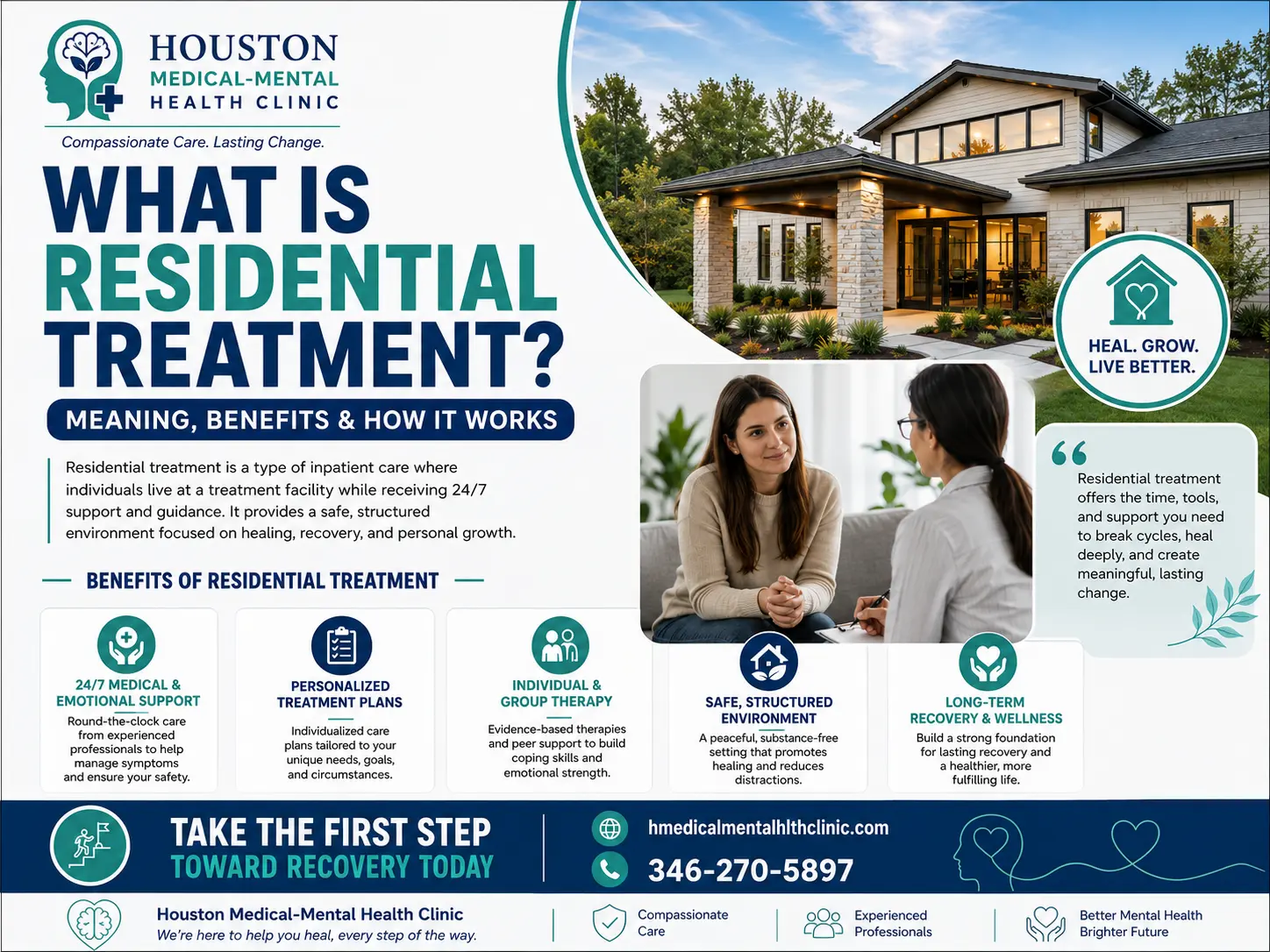
Residential treatment is a live-in, sub-acute, healthcare program that offers intensive therapeutic care, structured daily activities, and 24-hour supervision in a non-hospital, home-like setting.
Residential treatment is designed for long-term recovery, growth, skill development, and mental health, as opposed to short-term hospitalizations for medical stabilization. Residents stay for a long period of time, from 30 days to several months, so they can remove themselves from their usual everyday environment and focus solely on their health.
Residential treatment can be used to treat the following conditions:
- Substance Use Disorders (SUD): Hooked on alcohol, prescription medication, or illegal drugs.
- Severe Mental Health Conditions: Major depression, bipolar disorder, severe anxiety, complex PTSD or borderline personality disorder.
- Eating Disorders: Anorexia, bulimia, binge eating disorder and body dysmorphia related to eating disorders.
- Dual Diagnosis / Co-Occurring Disorders: When a person suffers from both a mental health disorder and a substance abuse disorder.
- Behavioral & Adolescent Issues: Teens & young adults with trauma, severe emotional regulation, self-harm, or behavioral issues.
The Difference between Residential, Inpatient, and Outpatient Care
The range of care will help you find the right facility to suit your needs. Residential care is compared to other accepted levels of care:
Hospital Inpatient Care involves short-term acute medical stabilization in a specific ward of a hospital that is very restrictive, with doctors available 24/7, and usually lasts for 3-10 days.
Residential Treatment provides longer-term recovery and skill development (30 to 90+ days), in a home-like environment with available 24/7 privileges and support staff.
Outpatient Care (IOP / PHP) can be completed in a few weeks to months while the person continues to live in their own home, with their full independence outside of the clinic hours.
Key Benefits for Mental Health and Addiction
An Immersive, Trigger-Free Environment: The brain needs a break to reset and heal when you remove yourself from negative influences, toxic environments, easy access to substances, or the stress of the day at work/family.
24/7 Support and Safety: 24/7 Support and Safety. Residential facilities provide 24/7 professional assistance, keeping you safe when you are most vulnerable.
Peer Support: Isolation is a driver of mental ill health and addiction; peer support and belonging are a remedy. Community, less shame, and more lifelong accountability networks result from living with others who are experiencing the same struggle(s).
Holistic Healing Approach: Residential care treats the whole person, mind, body, and spirit, and more than just symptom management.
Chaotic life: Many people coming into treatment have unstructured daily lives. Residential life provides healthy sleep routines, good nutrition and eating habits, physical activity, and scheduled daily activities.
Process and Core Components of Treatment.
A high-quality residential program is a structured clinical pathway individualized to each person:
- Intake & Comprehensive Assessment: Psychological, medical, and social evaluations are performed by multidisciplinary teams (psychiatrists, therapists, and medical staff) to create a personalized treatment program.
- Medical Detoxification (If needed): For substance use, patients may also participate in a medically supervised detox (if necessary) on site or at an affiliate facility before engaging in full therapeutic programming.
- The Active Rehabilitation Phase: The heart of the treatment that includes daily individual therapy, group processing, and workshops on education and skills building.
- Aftercare & Transition Planning: Clinicians begin developing a comprehensive aftercare plan with the patient long before discharge, which includes outpatient treatment plans, support groups, and sober living programs.
A Residential Treatment Program can offer a normal day’s routine.
A typical day will include a mixture of clinical tasks, wellness activities, personal reflection, and community building, but will vary from facility to facility:
- 07:00 AM – 08:00 AM: Morning Wake-Up, Meditation/Yoga, and Healthy Breakfast
- 08:30 AM – 10:00 AM: Morning Community Meeting & Psychoeducational Group
- 10:15 AM – 12:00 PM: Specialized Group Therapy (e.g., Trauma Work, CBT, Relapse Prevention)
- 12:00 PM – 01:00 PM: Catered Lunch & Rest Period
- 01:15 PM – 03:00 PM: Individual Therapy Session / Experiential Therapy (Art, Music, or Equine Therapy)
- 03:15 PM – 05:00 PM: Wellness & Recreation (Gym time, nature walks, mindfulness)
- 05:30 PM – 06:30 PM: Dinner
- 07:00 PM – 08:30 PM: 12-Step or SMART Recovery Peer Support Group / Evening Reflection
- 09:00 PM – 10:00 PM: Personal Time, Journaling, & Lights Out
Therapies and Services available
Effective residential treatment programs are based on evidence-based clinical practice. Typically, a program will involve several modalities:
Cognitive Behavioral Therapy (CBT): Recognizes and reframes negative thinking and actions.
Dialectical Behavior Therapy (DBT): Emotional Regulation, Distress Tolerance, and Mindfulness Skills.
Trauma-Informed Therapies (EMDR): Works on underlying trauma without re-traumatizing. Family Therapy: Resolves communication problems and teaches family members how to help with long-term recovery.
Experiential & Holistic Therapies: Art therapy, music therapy, equine-assisted therapy, yoga, and acupuncture to facilitate non-verbal healing.
Finding the Appropriate Residential Treatment Program
If you or your loved one:
- Tried conventional weekly outpatient treatment but failed to achieve any permanent results.
- Believe you are not being safe or recovering in your current environment at home.
- Need ongoing support to deal with very strong symptoms/cravings safely.
- Challenge with managing multiple conditions together that are interdependent.
Evaluating Programs and Finding the Best Fit
While looking into residential treatment centers, try to ask these questions:
- Is she or he licensing and accredited? Check for accreditation by The Joint Commission or CARF International (Commission on Accreditation of Rehabilitation Facilities).
- What are your Clinical Staff's qualifications? Make sure that doctors, psychiatrists, and therapists are board certified and licensed in their specialty.
- What modalities do you use based on evidence? Make sure they have treatments that have been proven to work rather than treatments that haven't been proven successful.
- How do you manage concurrent conditions? If you are suffering from both depression and addiction, then the facility you choose needs to provide integrated dual diagnosis treatment.
- Aftercare planning: What does this look like? A planned return to life is critical for long-term recovery.
Frequently Asked Questions
What is residential treatment?
Residential treatment is a live-in, sub-acute healthcare and support program that provides 24-hour structured care, professional supervision, and intensive therapy in a home-like environment for persons having mental health, addiction, and behavioral problems.
What is the difference between residential and inpatient treatment?
Inpatient hospital care is short-term (days) and is aimed at acute medical stabilization and crisis management in a clinical hospital environment. The length of time in residential care can range from weeks to months, and it provides a more comprehensive psychological healing experience, lifestyle changes, and coping skills in a non-hospital setting.
So, who is residential treatment for?
This is for people who need more support and structure than an outpatient therapy provides and for people who do not need immediate emergency hospital stabilization.
Is residential treatment covered by insurance?
Numerous health insurance companies provide coverage to cover a portion or all of the expenses associated with a residential mental health and/or substance use treatment through their behavioral health benefits. Coverage will vary based on the type of policy you have, medical need, and in- or out-of-network status of the facility.
Does residential treatment work?
Yes. Long-term residential treatment consistently has been found to reduce substance use relapse, to reduce hospitalization for mental health conditions, and to provide long-term benefits in terms of overall quality of life by treating root causes of disease as opposed to symptoms.