
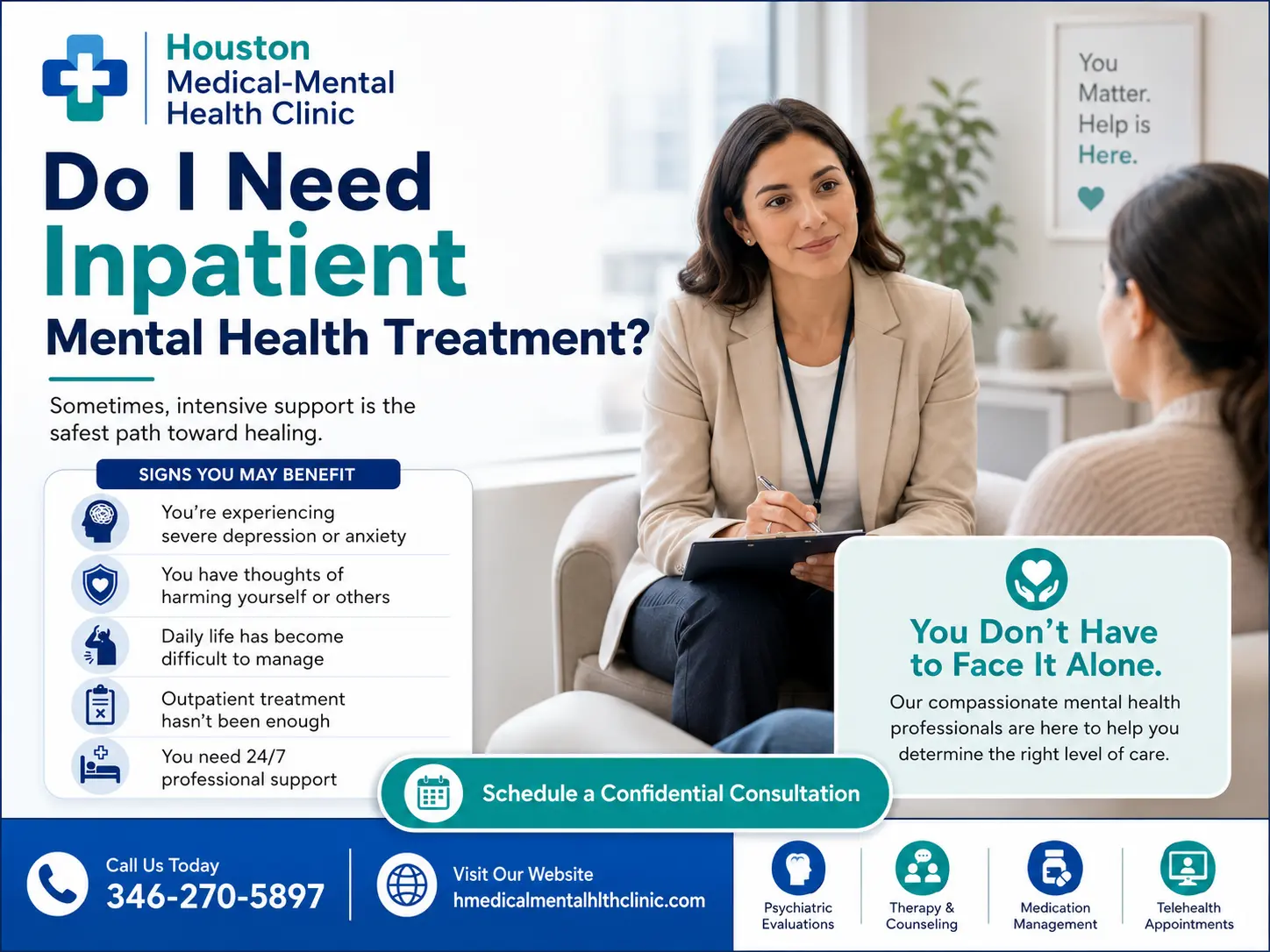
Do I Need Inpatient Mental Health Treatment? Signs, Structure
Recognizing when standard outpatient therapy isn't enough can be challenging. Mental health conditions do not operate on a predictable schedule, and when symptoms escalate into a crisis, knowing when to seek intensive care is vital.
Inpatient mental health treatment exists to stabilize acute crises, ensure immediate physical safety, and help individuals regain their balance when life feels unmanageable. This guide will help you evaluate whether inpatient treatment is the right fit, what to expect during a stay, and how to access care quickly.
Recognizing the Need for Inpatient Mental Health Treatment
Inpatient mental health care is the highest level of psychiatric treatment available. It is specifically designed for individuals experiencing severe, acute mental health symptoms or safety risks that cannot be managed in an outpatient setting.
Here are the key points for the levels of psychiatric care:
1. Inpatient Care
- Purpose: Designed for acute psychiatric crises.
- Key Features: Provides 24/7 medical supervision and continuous safety monitoring.
- Setting: Highest level of care, typically hospital-based.
2. Residential Care
- Purpose: Focused on long-term, sub-acute treatment.
- Key Features: Emphasizes therapeutic skill-building and structured daily living.
- Setting: Non-hospital, live-in facility with round-the-clock support.
3. Outpatient Care
- Purpose: For stable patients requiring ongoing mental health support.
- Key Features: Involves scheduled therapy sessions (ranging from weekly to daily, depending on intensity).
- Setting: Clinic-based or private practice; patient lives independently at home.
Common Signs Indicating a Need for Inpatient Care
If you or a loved one is experiencing any of the following, an evaluation for inpatient care is warranted:
- Inability to maintain basic daily self-care (e.g., severe neglect of eating, bathing, or sleeping).
- Severe psychosis, such as hearing or seeing things that others do not (hallucinations), or holding fixed, unrealistic beliefs (delusions).
- Extreme mood swings or severe manic episodes that lead to dangerous, impulsive decisions.
- Profound, paralyzing depression that renders a person entirely unable to function or stay safe.
- Loss of touch with reality or intense disorientation.
Suicidal Thoughts and Behaviors as Immediate Risk Factors
Active suicidal ideation—meaning not just passive thoughts of wishing to be dead, but an active desire, plan, or intent to end one's life—is a primary reason for inpatient admission. An inpatient environment provides an immediate safety net, removing access to lethal means and offering 24/7 supervision while the acute crisis resolves.
When Outpatient Treatment Hasn’t Worked
If you have been attending weekly therapy, taking prescribed medications, or even participating in intensive outpatient programs (IOP) or partial hospitalization programs (PHP), yet your symptoms continue to worsen, higher-level care may be required. Inpatient admission allows doctors to quickly adjust medications, observe reactions in real-time, and interrupt destructive cycles.
Co-Occurring Disorders Requiring Specialized Care
When severe psychiatric symptoms are compounded by acute substance use or withdrawal, managing care at home becomes exceptionally risky. Inpatient psychiatric units can manage co-occurring conditions simultaneously, ensuring medical safety during detoxification while treating underlying mental health conditions.
Aggressive Behavior
Unchecked psychiatric distress can sometimes manifest as severe agitation, paranoia, or aggressive behavior toward loved ones. When an individual's behavior becomes unpredictable or dangerous, inpatient care provides a controlled environment to de-escalate symptoms safely.
What Is Inpatient Mental Health Care and Who Provides It?
Inpatient care takes place in a specialized psychiatric hospital or a secure behavioral health unit within a general hospital. Care is delivered by a multidisciplinary team of professionals, including:
- Psychiatrists (for diagnosis and medication management)
- Psychiatric Nurses (for 24/7 medical oversight and medication administration)
- Licensed Therapists and Social Workers (for individual, group, and family counseling)
- Mental Health Technicians (for daily support and safety monitoring)
Duration and Discharge from Inpatient Treatment
Unlike residential care—which can last several months—inpatient stays are short-term. The average length of stay ranges from 3 to 10 days.
The main goal of inpatient care is stabilization, not a complete cure. Once the immediate crisis passes and a safe discharge plan is established, the patient transitions to a lower level of care, such as residential treatment, a partial hospitalization program (PHP), or intensive outpatient care (IOP).
Comparing Inpatient, Residential, and Outpatient Care
INPATIENT TREATMENT
- Primary Goal: Focused on acute crisis stabilization and ensuring immediate patient safety.
- Medical Presence: Offers 24/7 on-site access to doctors and nurses for continuous medical intervention.
- Setting: Conducted within a secure, locked hospital unit with restricted movement.
- Average Duration: Short-term, typically lasting between 3 and 10 days until the crisis resolves.
RESIDENTIAL TREATMENT
- Primary Goal: Directed toward long-term recovery through intensive therapeutic skill-building and behavioral change.
- Medical Presence: Features 24/7 support staff for supervision, with medical oversight available but not continuously provided by physicians.
- Setting: A home-like, non-hospital environment that promotes comfort and normalization.
- Average Duration: Intermediate to long-term, usually spanning 30 to 90+ days.
OUTPATIENT CARE
- Primary Goal: Aimed at ongoing therapy, symptom maintenance, and medication management for stable individuals.
- Medical Presence: Limited to scheduled appointment hours only; no continuous on-site medical staff.
- Setting: Patient resides at home or in the community and visits a clinic or private practice for sessions.
- Average Duration: Indefinite or ongoing, ranging from several months to years, depending on individual needs.
Should Inpatient Treatment Be Considered for a Loved One?
Watching a family member or friend struggle with severe mental illness is emotionally draining. You should consider discussing inpatient care for a loved one if:
- They express explicit desires or plan to hurt themselves or others.
- They are experiencing severe delusions or paranoia that prevent them from trusting caregivers.
- They have stopped eating, drinking, or taking vital medication due to psychiatric symptoms.
- You feel unsafe or unable to ensure their physical safety at home.
When approaching a loved one about care, speak with empathy rather than judgment. Frame the conversation around safety, health, and getting expert support during a painful time.
Taking the Next Steps Toward Healing
Seeking inpatient mental health treatment is not a sign of failure or weakness—it is a brave and crucial step toward protecting your life and well-being. While an inpatient stay is brief, it provides the stabilization, safety, and expert clinical guidance needed to begin rebuilding a sustainable path to mental wellness. If you or someone you care about is struggling, reach out for professional help today.
Frequently Asked Questions
What is inpatient mental health treatment?
Inpatient mental health treatment is intensive, 24/7 care provided in a secure hospital setting. It focuses on crisis stabilization, safety management, and rapid psychiatric evaluation for individuals experiencing severe mental health distress.
How do I know if inpatient care is the right option?
Inpatient care is appropriate if you are in immediate danger of hurting yourself or others, are unable to take care of basic needs due to psychiatric symptoms, or have experienced a severe breakdown in reality (psychosis) that cannot be safely managed at home.
What happens during an inpatient mental health stay?
During a stay, patients undergo comprehensive psychological assessments, receive daily psychiatric evaluation and medication adjustments, participate in structured group and individual therapies, and work with social workers to create a safe post-discharge transition plan.
How long does inpatient mental health treatment usually last?
Inpatient care is designed for short-term crisis management. Most stays last between 3 and 10 days, depending on how quickly the individual stabilizes and whether a safe outpatient or residential follow-up plan is ready.