
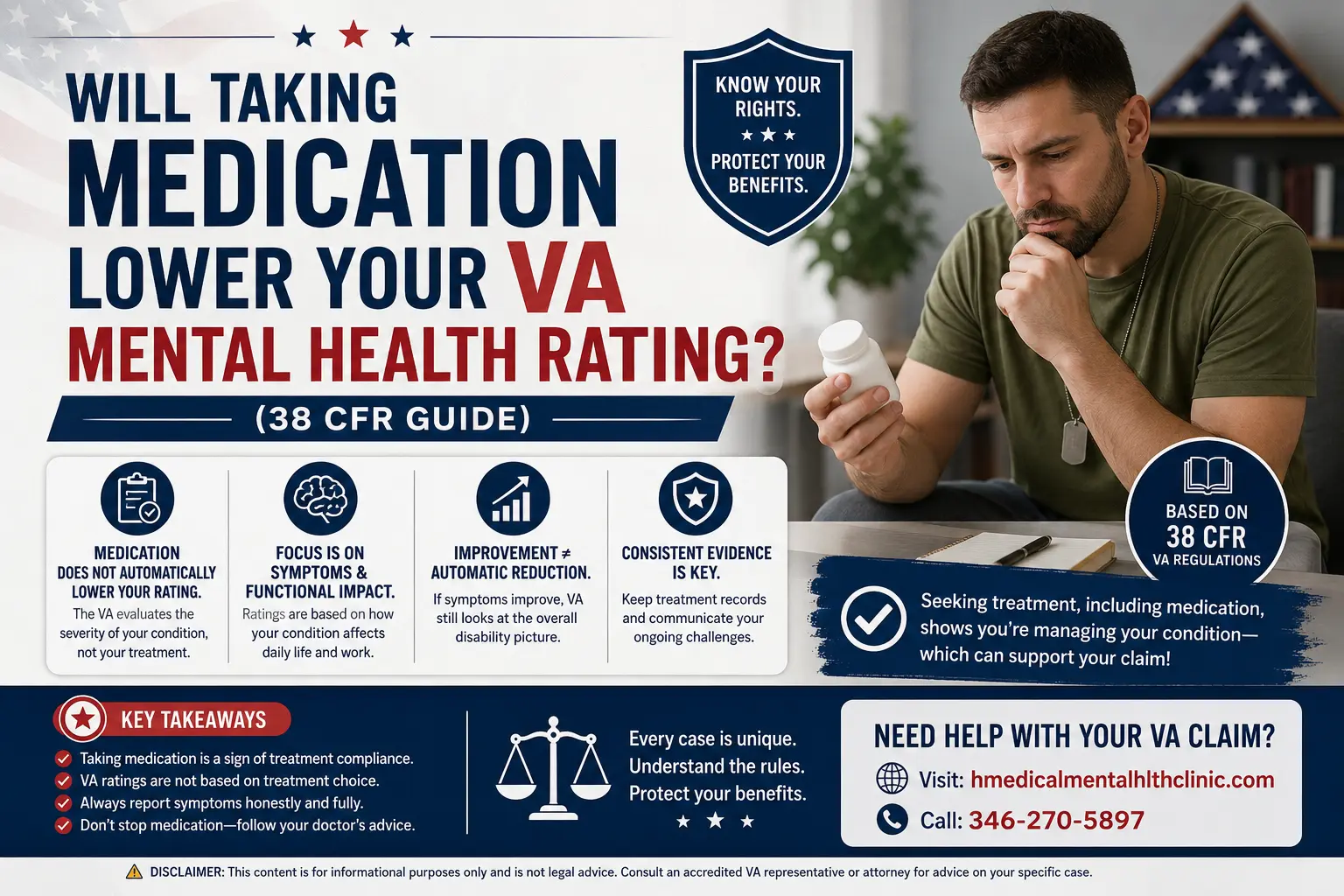
Will Taking Medication Lower Your VA Mental Health Rating? (38 CFR Guide)
Veterans who take psychiatric drugs do not automatically have their mental health disability rating reduced by the Department of Veterans Affairs (VA). VA disability benefits are based on the overall severity of your service-connected condition and the extent of your occupational and social disability (not just if you are on medication or if you have some symptom relief).
The VA must take into account the frequency, severity, and extended duration of psychiatric symptoms, the times when symptoms abate, and your ability to adjust at those times, pursuant to 38 CFR §4.126. Most importantly, regulations instruct the VA to consider the entirety of the evidentiary record, not just a single "snapshot" of the C&P exam. The important difference between clinical symptom management and continued functional recovery is what matters most to veterans if their rating is in jeopardy.
Key Takeaways
No automatic reductions: Prescribed psychiatric medication doesn't automatically result in a rating reduction.
Functional Impairment Matters: Ratings below those at 38 CFR § 4.130 are based on how symptoms affect function in your daily life and in the workplace.
Stabilization Protections: Additional protections are provided for ratings with 5 years or more in service in 38 CFR § 3.344 (Stabilization Protections).
Medication Side Effects: Secondary service connection for 38 CFR § 3.310 is available for medication side effects resulting from prescribed medication that are either physical or psychological in nature.
Never Stop Treatment for a Rating: Stopping meds to keep a rating is dangerous and does not guarantee a better rating.
According to the regulations at 38 CFR § 4.130, the Mental Health Ratings are as follows:
All psychiatric conditions such as PTSD, major depressive disorder, and anxiety are treated in a similar fashion at VA rates, which are based on the General Rating Formula for Mental Disorders (38CFR§4.130). The score is from 0% to 100% for functional impairment:
10% Rating: mild symptoms or symptoms that are controlled by taking medicine at all times.
30% Rating: This means that 30% of the time, work efficiency is reduced, and occupational functions are impossible at times.
50% Rating: Some reduction in reliability and productivity, such as panic attacks, memory issues, or less ability to sustain work performance.
70% Rating: Deficiencies in most areas, including work, school, family relationships, judgment, thinking, or mood.
100% Rating: 100% impairment of a person's occupation and social functioning.
To include symptoms controlled by a continuous medication, a 10% rating is explicitly included. Including the use of medication, but having an ongoing significant disruption (e.g., sleep disturbance, social isolation, poor work relationships) continues to justify a high evaluation (e.g., 50% or 70%).
Daily Functioning vs. Medical Exam Snapshots (38 CFR § 4.10)
Disability evaluations, per 38 CFR § 4.10, are based on your ability to function in the ordinary activities of daily living, including work.
Sometimes, a brief C&P exam will not be enough to cover your entire condition. When measured over 30 minutes, a veteran may seem well prepared, cooperative, and at ease. But that is not in contradiction with a medical record documenting:
- Strong tiredness or brain fog, associated with medications
- Failure to cope with job demands or management
- Continued nightmares, hypervigilance, and panic attacks.
- Relationships with family and friends are strained, and there is social isolation.
The VA will consider your entire record (not just what you show them in one appointment).
Standards of legal protection against unfair rating reductions
If, through treatment, the VA believes that your symptoms have improved, and therefore you will receive a lower rating, certain regulations will apply:
The 5-Year Rule (38 CFR § 3.344)
If a rating has been awarded for 5 years or more, only a worsening rating can be made following a single exam. A worsening rating is the only rating that can be made following a single exam when the rating has been held for 5 years or more. You need to show the VA that you have improved for the long term in "ordinary conditions of life" after it looks at your overall medical record.
Material Change Standard (38 CFR § 4.13)
The 38 CFR § 4.13 requires the re-evaluation to show a change in the underlying medical condition, not simply a change in the thoroughness of two examinations from different examiners.
Procedural Rights (38 CFR § 3.105(e))
If you are sent a Notice of Proposed Reduction, you will generally have:
- 60 days to submit new medical evidence showing sustained impairment.
- 30 days to request a predetermination hearing (which stalls the reduction while the review is pending).
Secondary Service Connection for Medication Side Effects
Psychiatric medications can sometimes cause distinct secondary physical or psychological conditions. Under 38 CFR § 3.310, disabilities proximately caused or aggravated by a service-connected condition (or its treatment) qualify for secondary service connection.
Common examples include:
- Weight gain leading to metabolic issues or sleep apnea
- Gastrointestinal distress or chronic acid reflux
- Erectile dysfunction or sexual dysfunction
- Severe sedation, tremors, or cognitive blunting
Documenting these symptoms with an independent medical provider allows you to establish a complete record of how your treatment impacts your overall health.
Can You Receive TDIU If Medication Improves Some Symptoms?
Yes. Total Disability Based on Individual Unemployability (TDIU) under 38 CFR § 4.16 allows veterans to receive compensation at the 100% rate if their service-connected disabilities prevent them from securing or maintaining substantially gainful employment.
Even if medication mitigates panic attacks or mood swings, persistent functional limitations—such as severe concentration gaps, absenteeism, or unpredictable side effects—can still render a veteran unemployable. The core legal test for TDIU is employment impact, not medication usage.
Independent Mental Health Evaluations in Houston
Accurate, objective clinical documentation is critical when navigating VA re-evaluations or establishing functional impairment. At Houston Medical-Mental Health Clinic, our clinical team provides comprehensive psychiatric evaluations and individualized mental health treatment for veterans. We focus on documenting your complete health picture—including ongoing symptoms, functional limitations, and medication side effects.
Frequently Asked Questions
Will stopping my medication increase my VA rating?
No. Stopping prescribed treatment does not guarantee a higher rating and can put your mental and physical health in danger. Ratings are based on documented functional impairment.
Can the VA force me to take psychiatric medication?
No. Healthcare decisions are based on informed consent. Treatment choices should always be made with a qualified medical professional. They should never be driven by a strategy for a disability claim.
What should I do if I receive a proposed rating reduction notice?
Immediately review the VA’s cited evidence and request a predetermination hearing within 30 days. Then, gather your recent medical records and consult an accredited VSO, claims agent, or healthcare provider for updated documentation.