
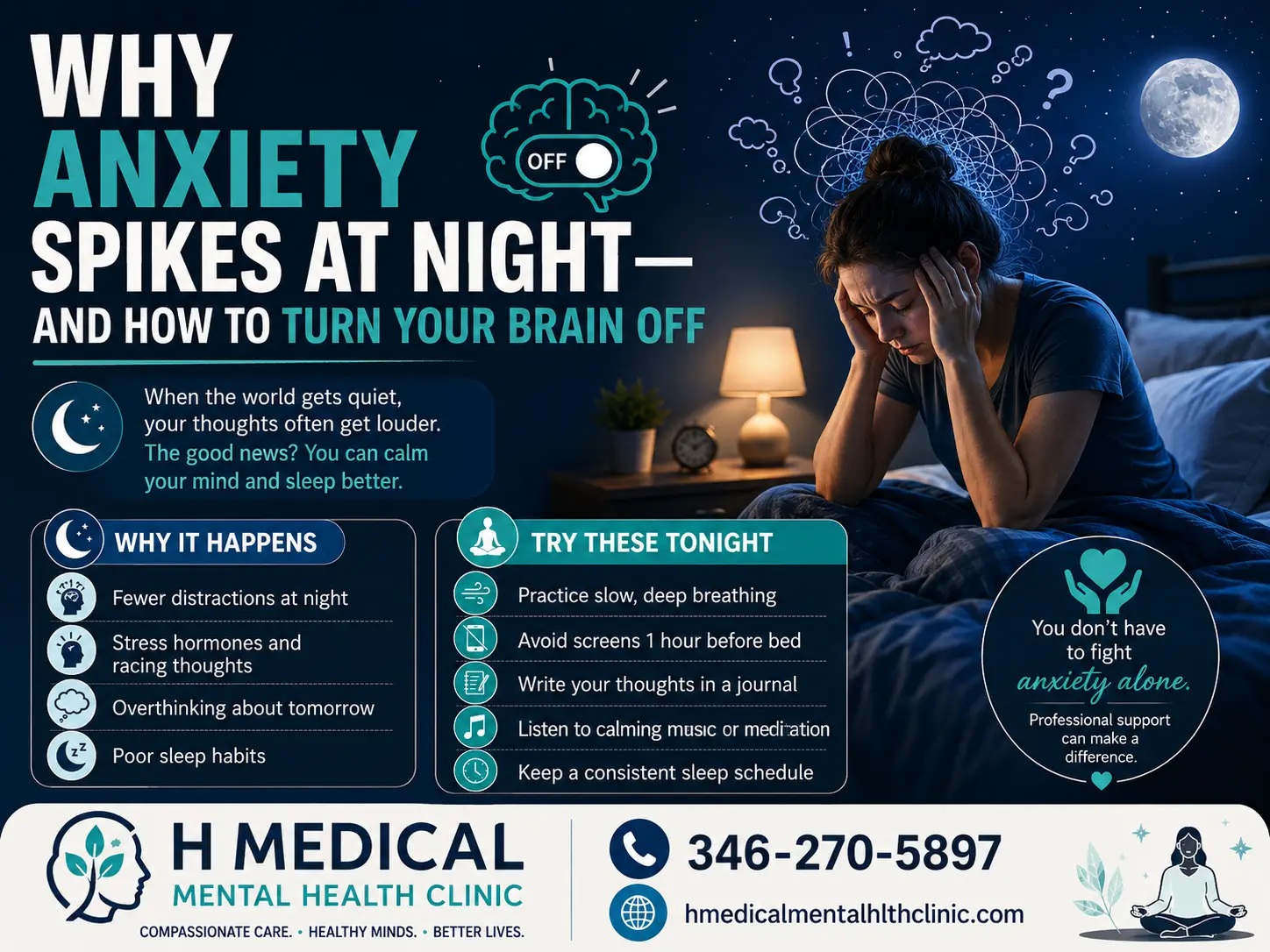
Why Anxiety Spikes at Night—and How to Turn Your Brain Off
We have all had feelings of anxiety at one time or another. A level of worry is a perfectly humanistic reaction to danger or stress, whether it's a nervous jitter before a big job interview, or the stress of heavy traffic on the physical highway. If concerns turn into constant and overwhelming and start to impact your everyday life, however, they turn into a medical condition. This complete guide explains the nature of anxiety disorders, their symptoms and how integrated medical care can enable you to regain the peace of mind you've been losing.
What is an anxiety disorder?
Anxiety disorder is an ongoing mental illness caused by excessive, unrelenting and unreasonable worrying that continues even after the event that caused it has passed. An anxiety disorder can affect your daily life, unlike normal stress, which affects your life in a different way. It continually disrupts your nervous system from being in "rest and digest" mode.
Types of Anxiety Disorders
Anxiety has no uniform characteristics. It may be different for each person:
- Generalized Anxiety Disorder (GAD): Persistent and exaggerated worry about activities and events in everyday life for no clear reason, including health, money, family, and work.
- Panic Disorder: Sudden recurring periods of intense and overwhelming fear, along with physical sensations such as rapid heart rate, chest pain, and difficulty breathing (usually referred to as panic attacks).
- Social Anxiety Disorder: The persistent, overwhelming fear of being watched, judged, or embarrassed by others in social and/or performance situations.
- Specific Phobias: An extreme and irrational fear of a particular object or situation, place or activity (like flying, heights, spiders, etc.).
- Agoraphobia: Fear of being in places or situations where leaving may be difficult or escape will not be possible if a panic attack occurs.
Prevalence of anxiety disorders.
Anxiety disorders are the most prevalent mental health disorders in the United States. The national health statistics show that approximately 19% of adults have an anxiety disorder at some point in the year and more than 31% of adults will have an anxiety disorder at some time in their life. It's not as if you're the only one who's struggling.
Symptoms and Causes
Anxiety is a very physical experience. It's not a head thing; it affects your whole body.
How do you know if you have an anxiety disorder?
Psychological symptoms consist of feelings, thoughts, and moods, while physical ones involve digestive, muscular, and nervous system abnormalities.
Psychological Symptoms
- Constant unease or preoccupation
- Being on edge, irritable or restless
- Loss of memory and focus
- Prosecutors believe that a defendant is guilty as charged.
- Difficulty sleeping (insomnia or waking up panicking)
Physical Symptoms
- Rapid heart rate or racing heart/palpitations.
- Shortness of breath or hyperventilating
- Chronic muscle tension and jaw clenching (bruxism)
- Stomach problems (upset stomach, stomach pain)
- Shaking, sweating or cold hands
How do anxiety disorders occur?
Medical research indicates that anxiety disorders are not caused by a single defect, but rather result of multiple factors:
- Brain Chemistry: Neurotransmitters (chemicals that send messages in the brain) can be imbalanced, which can change the way the brain processes fear and stress.
- Genetics: Anxiety and other mental illnesses have a genetic basis, and those who have anxiety in their families are more likely to be predisposed to the condition.
- Life Trauma: The effects of severe life stress, abuse, loss and/or childhood trauma can lead to long-term hyper-vigilance of the nervous system.
- Physical Illness: Conditions such as heart disease, diabetes, or thyroid problems can trigger anxiety or exacerbate it.
Diagnosis and Tests
What are the symptoms of anxiety disorders? There is no blood test or scan that can diagnose anxiety. Rather, a licensed healthcare practitioner makes the diagnosis based on a clinical evaluation. On a visit, you will be asked about your medical history, the physical symptoms you are experiencing and how long you have been experiencing them. They may also employ standardized psychological screening tools (questionnaires) to assess the level of concern and to exclude other possible causes. They may also have your blood tested routinely to make sure that your physical symptoms are not caused by another medical condition such as a vitamin deficiency or thyroid imbalance.
Management and Treatment
Feeling anxious is very treatable. It is best to combine a brain chemistry and behavioral approach at the same time, for best results.
Anxiety Disorders Medication
Medications can make the world more even for some, by helping to regulate the chemicals involved in the brain, enabling them to participate in life and psychotherapy. Common options include:
- SSRIs and SNRIs: Daily medications that over time regulate the use of serotonin and norepinephrine in your brain, which in turn helps to regulate your mood and stress.
- Beta-Blockers: Medications that help control the physical symptoms of temporary performance anxiety, e.g. beta blockers (to help keep the heart rate steady and reduce shaking hands).
- Anxiolytics: Medications used for short-term (acute) reduction of severe panic symptoms, generally used in a clinical setting under close supervision.
Treatment for Anxiety Disorders with Psychotherapy.
Therapy offers the hands-on set of tools for dealing with your mind. Cognitive Behavioral Therapy (CBT) is the gold standard treatment for anxiety. CBT helps you to recognize, challenge and reframe negative thinking and behavior patterns, enabling you to deal with stress in a rational manner rather than panicking.
Prevention and Self-Care
What can I do to take care of myself if I have an anxiety disorder? In addition to professional treatment, everyday habits have a strong impact on your general levels of anxiety:
- Reduce Caffeine and Alcohol: These can interfere with sleep patterns and stimulate or simulate panic symptoms in your nervous system.
- Focus on Physical Activity: Exercise regularly to clear out the stress hormones.
- Experiment: Set up a Regular Bedtime – Wake Up Schedule: Your brain's emotional control is significantly affected by fatigue.
When should I see my health care provider?
If anxiety is ongoing, is physically uncomfortable or if it is interfering with work, sleep or life, please consult a professional. Physical health and mental health are linked, so a comprehensive care approach is the most effective method for healing. We offer everything from physical medicine to professional psychiatric care and customized therapy in one convenient location, at Houston Medical-Mental Health Clinic. With DNP, Lucas Egebe, PMHNP-BC as your guide, you'll identify the underlying cause of your symptoms and develop a realistic plan to recover. Make the first move to get your calm back. Make an appointment to walk-in or video at Houston Medical-Mental Health Clinic today.
Conclusion
Anxiety is a truly medical condition and impacts your entire system, but it's one that's very treatable – with the right therapy and medication management. It's not something you need to handle on your own. In Houston Medical-Mental Health Clinic, under the leadership of Dr Lucas Egebe, DNP, PMHNP-BC, we deliver physical medical care, professional psychiatry and personal therapy all in one place. You can come to our North Houston clinic or if you prefer, visit us virtually with telepsychiatry throughout the state of Texas. Book a walk-in or video appointment now to get your calm back.
FAQs
How to stop an anxiety attack quickly?
Try to concentrate on your breathing, using the 4-7-8 breathing technique (4 seconds in, 7 seconds hold, 8 seconds out) or changing your immediate environment or using the grounding technique of identifying physical objects.
When am I supposed to visit a health professional?
If you experience the anxiety on a daily basis, if it leads to physical symptoms, or if it interferes with your work, sleep and life, please seek professional assistance.
Are there any anxiety medications available online in Texas?
Yes. You can safely receive professional psychiatric evaluations and legal prescriptions through secure video visits across Texas with the Houston Medical-Mental Health Clinic.