
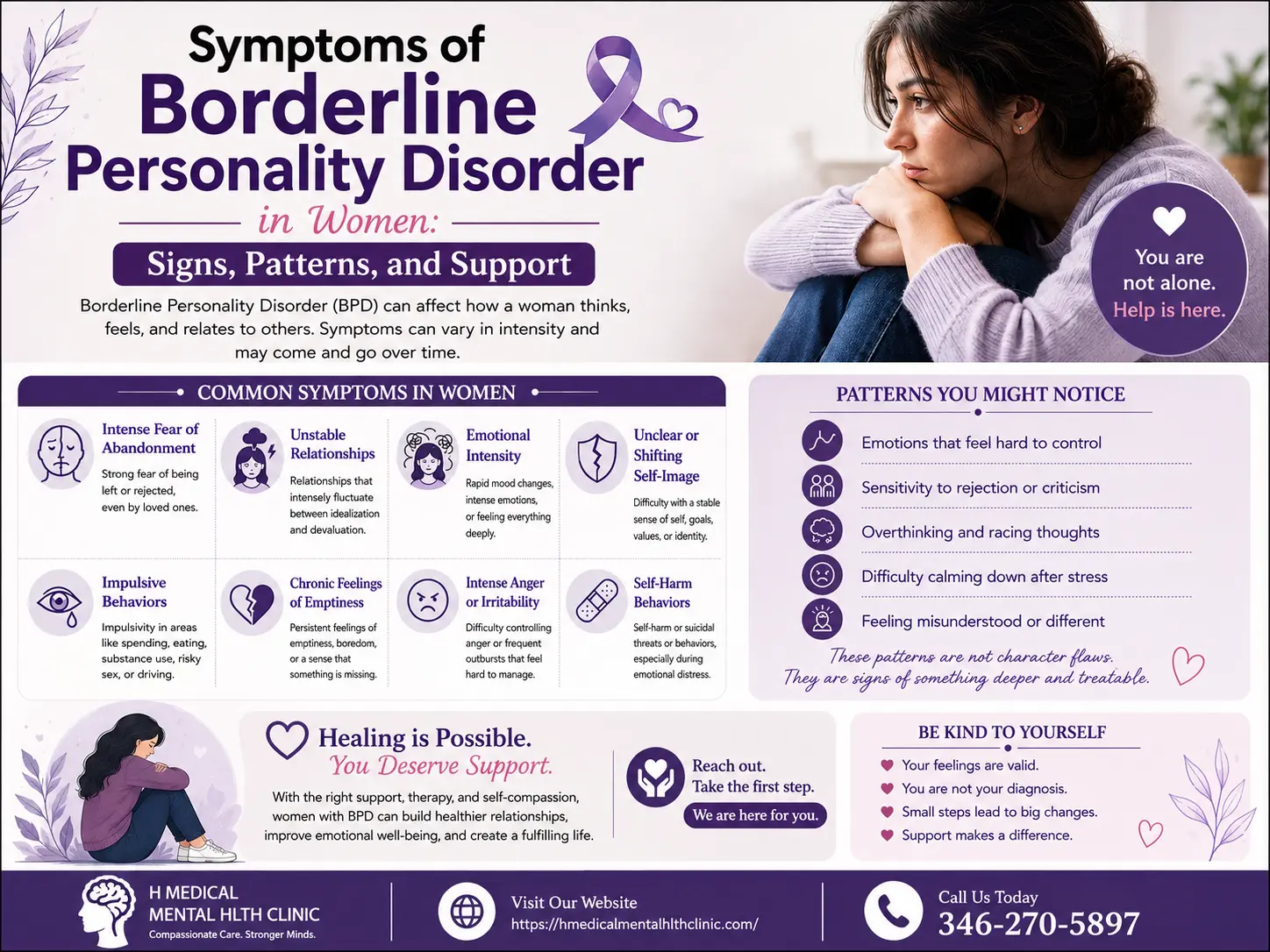
Symptoms of Borderline Personality Disorder in Women: Signs
Borderline Personality Disorder (BPD) is a serious condition of the mind with its associated issues of emotional instability, unpredictable relationships, and a low sense of self-worth. Although BPD can happen to anyone, studies show that around 75% of the diagnoses are made for women (NIMH). The symptoms of BPD in women are frequently misinterpreted or misdiagnosed as mood swings or severe anxiety, as they often occur in tandem with mood disorders, anxiety, or trauma. The first step to getting some clarity and effective, evidence-based care is to understand the symptoms of borderline personality disorder in women.
What is borderline personality disorder?
BPD is based on emotional dysregulation, which is characterized by the brain's emotional alarm system sounding too quickly and staying on for longer than usual. A normal change in our relationship that others may not notice could be a life-changing event for a woman with BPD.
There are 9 common symptoms of BPD in women.
There are nine main clinical features that mental health practitioners use when assessing BPD. To make the diagnosis, five or more of these patterns should occur over time:
1. Frantic Efforts to Avoid Abandonment
Women suffering from BPD tend to have a fear of rejection or separation. Overreactions to seemingly minor things, like an overtime partner or a delay in texting back from a friend, can cause serious panic or despair. This can result in frantic behaviors such as begging, clinging, and cut-offs to avoid potential rejection.
2. Development of Self-Defense Skills and Behaviors (“Splitting”)
BPD is frequently associated with a tendency to think in black and white terms regarding people, situations, and self-worth; this is referred to as "splitting. One of the patterns often associated with BPD is thinking in black and white – regarding people, situations, and self-worth. A loved one may be in one moment "my absolute savior" and the next "they don't care about me at all".
3. Self-Image disturbances and Identity crisis.
There are times when women who suffer from BPD will say they feel like a chameleon. They can easily change their jobs, values, fashion, and association with others based on the people around them, and these people may have a constant feeling of being unsure about themselves.
4. Impulsive, High-Risk Behaviors
Women with BPD can sometimes take impulsive actions as a way to deal with the overwhelming internal pain they feel. These may include:
- Spending money impulsively or taking risks with finances.
- Binge eating or restriction of food
- Use of drugs or alcohol
- Unsafe driving or risky personal decisions
5. Self-harm or suicidal ideation that recurs.
Persistent emotional suffering might result in self-harming actions (e.g., cutting, burning, or hitting oneself) or repeated ideas of suicide. These behaviors are frequently exaggerated ways of trying to get others to know how they are feeling emotionally or to try to control their uncontrollable emotional suffering.
6. Grinding Clenches or Grinding Teeth
The emotional swings that occur with BPD can occur in hours or minutes, whereas the manic or depressive episodes in bipolar disorder last for days or weeks. Sometimes a woman may go from feeling hopeful to feeling very sad or overwhelmed on an issue through one conversation.
7. Surviving with a sense of emptiness
Many women with BPD experience a yearning in the chest or mind that never goes away. This sense of emptiness is sometimes too painful and leads to frantic attempts to fill it with stimulation, connection, or distraction.
8. Intense, Inappropriate Anger
Severe anger outbursts, sarcastic comments, or explosive arguments that appear more than warranted by the provocation are common. These incidents are frequently followed by a sense of guilt, shame, and self-blame.
9. Stress-induced paranoia or dissociation
When the situation is highly stressful, a woman with BPD may feel dissociated or separated from her body or her surroundings ("depersonalization"), or she may have temporary paranoia, suspecting that loved ones are out to get her.
The difference between how BPD manifests in women and in men
Both men and women have the same overall diagnostic criteria for BPD, but their expectations and biology play a role in how their symptoms are expressed:
- Internalizing vs. Externalizing: Women tend to internalize distress, turning anger and emotional instability towards themselves through eating disorders, self-criticism, or self-harm. Males are statistically more likely to externalize BPD through being aggressive or exploding.
- Common comorbid conditions: BPD is often co-occurring with major depressive disorder, generalized anxiety disorder, PTSD/C-PTSD, and eating disorders in women.
- Quiet BPD: In women, intense fears, anger, and emotional volatility are often felt entirely within and are not visible to other people, which is a subtle type of the disorder known as "Quiet BPD.
There are effective treatment options available for BPD.
It can be tiring to live with BPD, but BPD is highly treatable! Most women can get a substantial reduction in symptoms and permanent remission with proper clinical care.
- Dialectical behavior therapy (DBT): the gold standard treatment for BPD. DBT was designed specifically for emotional dysregulation, teaching mindfulness, distress tolerance, emotion regulation, and interpersonal effectiveness.
- Cognitive Behavioral Therapy (CBT): This is a therapy that helps to reframe unhelpful thought patterns, cognitive distortions, and core beliefs about self-worth.
- Trauma-Informed Care: Works to resolve underlying trauma or adverse childhood experiences (ACES) that can often be a contributing factor to BPD symptoms.
Go a Step Further to Emotional Balance
You or someone close to you might recognize these signs, and you aren't alone. Mental health treatment can offer you specialized and empathetic care to help you gain control over your feelings and develop balanced and satisfying relationships. Our staff at H Medical Mental Health Clinic uses evidence-based, compassionate care for women who suffer from borderline personality disorder, anxiety disorders, mood disorders, and trauma.
Frequently Asked Questions.
1. What are the initial signs of a borderline personality disorder in women?
The first signs of borderline personality disorder typically revolve around excessive emotional sensitivity and rejection. Some individuals may experience mood swings within hours, be hypersensitive to others leaving them, idealize others and then suddenly turn against them, and feel emptiness or lack of identity often.
2. Is it possible to have BPD and still be able to function in your daily life?
Yes. Many women have a "High-Functioning BPD" or "Quiet BPD. They could have successful careers, academic success, a facade of perfection, and yet have deep emotional instability, chronic self-doubt, hidden self-harm, or anxiety around relationships.
3. What are the precipitants of a BPD episode in women?
Interpersonal relationship conflict is the most frequent cause of BPD episodes. This can be an unread text message, an actual or perceived rejection, meaningful criticism, a separation from a partner, or a change in plans. These events can activate the brain's alarm system and leave the individual with an instant, intense emotional response.