
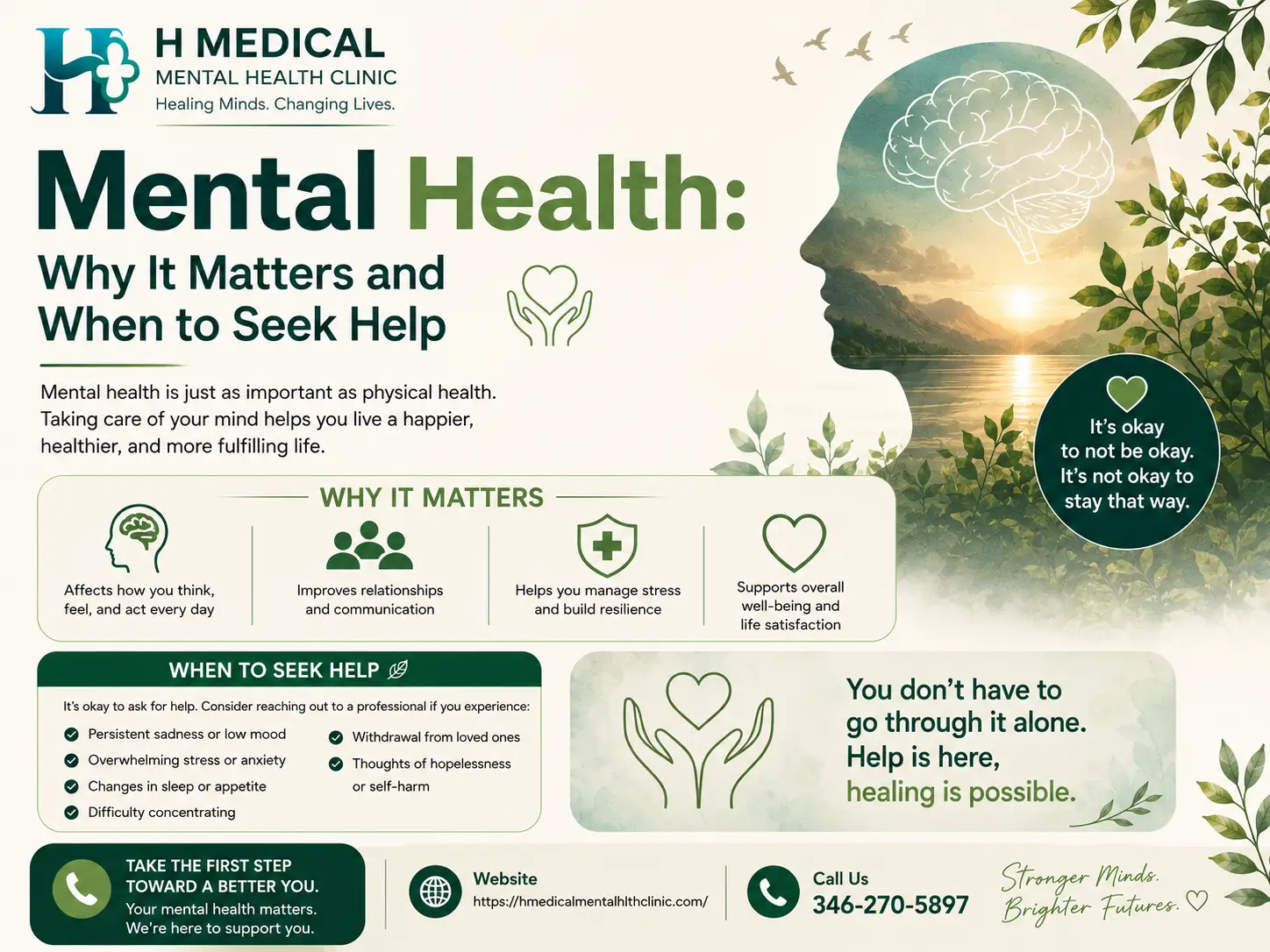
Knowing Mental Health: Why It’s Important and When to Get Help
The term "mental health" is used frequently, but what does it mean? Our mental health is like our physical health, and it needs our attention, care, and understanding. It's just as important to take care of your mind as it is to take care of your body. A simple guide to help understand what mental health is, what causes mental health problems and how to recognize if you or someone you love needs help.
What is meant by “mental health”?
Emotional, psychological, and social well-being are only a few aspects of mental health. As we walk through life, it influences our feelings, ideas, and actions. It also affects how we respond to stress, interact with others, and make choices. Being in good mental health involves more than just not having an illness. It is about realizing your potential, persevering through life's daily stresses, being productive, and giving back to your community.
Mental disorders: what are they?
Mental illnesses, sometimes referred to as mental disorders, are medical ailments that impact a person's thoughts, emotions, or behavior. These are a constant problem that interferes with your day-to-day functioning, unlike depression or stress, which only happen occasionally.
The most prevalent mental illnesses are:
- Depression: A prevalent illness marked by melancholy, pessimism, and disinterest that can affect relationships, employment, and academic pursuits.
- Anxiety disorders: These include excessive anxiety and fear that can develop into a chronic illness with physical symptoms like shortness of breath or a fast heartbeat.
- Bipolar disorder: Periods of high mood and energy interspersed with depressive episodes that can affect one's ability to make decisions or maintain equilibrium in life.
- Post-Traumatic Stress Disorder (PTSD): Usually develops following a violent, catastrophic, or conflictual event. Nightmares, flashbacks, and heightened awareness are common symptoms.
- Schizophrenia and other psychoses: Distort reality perceptions, resulting in delusions, hallucinations, and disordered thought patterns. They frequently need ongoing social and medical assistance.
- Eating disorders: These include bulimia and anorexia, which can have detrimental effects on one's health. They are characterized by disordered eating patterns and body image.
- Neurodevelopmental conditions: Disorders including attention-deficit/hyperactivity disorder (ADHD) and autism spectrum disorder (ASD) that affect learning, communication, and social interaction since childhood.
What makes mental health crucial?
Your entire life is built on your mental well-being. When your mind is healthy, it will help you with:
- Manage the stresses and difficulties of daily life.
- Maintain positive and healthy connections with friends, family, and coworkers.
- Take care of your physical health; long-term stress and mental illness can weaken your immune system and increase your risk of heart disease or stroke.
- Work effectively and to the fullest extent possible.
The relationship between mental and physical health
The body and mind are inextricably linked; they are not two distinct entities. Because the brain and body are interconnected, changes in one affect the other.
- Exercise: When you work out, your body produces endorphins, or "feel-good" hormones, which help you feel better and reduce stress.
- Sleep: An elevated risk of anxiety and depression is directly linked to sleep deprivation. Emotional regulation is more challenging when sleep is inadequate.
- Gut Health and Diet: According to recent study, the brain and digestive system are constantly connected. Lack of nutrients might negatively impact your energy and mood.
Things that affect my mental well-being?
Your psychological well-being is not determined by a single element. Instead, a variety of factors are at play:
- Biological: Genetics, brain chemistry, or a family history of mental illnesses.
- Life experiences include trauma, past abuse, and ongoing stress (from money problems or a difficult job, for example).
- Lifestyle influences include sleep, exercise, nutrition, and substance addiction.
Is it possible for my mental health to alter over time?
Yes, definitely, yes. Mental health is a journey and not a destination. It is possible to have a great day and a bad day. A person may feel worse, for example, when their needs and resources are not balanced, as when their needs outweigh their coping mechanisms. You may be less resilient than normal due to long work hours, caring for a sick family member or financial problems; however, these conditions can change or new coping skills can be learned.
Some common misconceptions about mental health are:
Often people don't realize they can get help due to false information and societal stigma. Let's clear up any misconceptions:
Myth: An individual with mental health issues is "weak.
Facts: Mental disorders do not affect the personality, but the brain. It takes a lot of courage to ask for assistance.
Myth: Mental health problems are not a problem for children.
Fact: Kids and teens can get clinically depressed, anxious and affected by other disorders. It's all about “when.”
Myth: If one puts in enough effort, they can be "snapped out of" anxiety and despair.
fact is that you can't wish for a medical condition. Rehabilitation and support will take time, and therapy will be required.
What are the ways for me to know if I have an issue with my mind?
With mental health issues, it can be difficult to know if it is a mental health problem or a difficult week. If you experience any of the above symptoms for longer than a few weeks it may be a sign of a more serious problem:
- Changes in sleep patterns, including sleeping too much, too little or consistently feeling tired.
- Social disengagement: Separation from people and objects that were once enjoyed.
- Sudden changes in mood, including unusual confusion, forgetfulness, worry, anger or fear.
- Physical problems: headaches, aches or pain that do not go away with treatment.
- Loss of helplessness: Disbelief that nothing will ever change or feeling totally numb.
These are some tips to manage your mental health every day:
- Caring for your mind doesn't need to be reserved for a crisis. You can build a small-scale, healthy routine that will make you more emotionally resilient:
- Engage in Mindfulness or Meditation: Even 5 minutes a day of mindfulness or meditation can make a huge impact in reducing stress.
- Learn how to say "no" to taking on too much work or interacting with coworkers to save time and energy.
- Excessive screen time can increase anxiety, and so can the amount of news and social media comparisons. Unplug frequently.
- Journaling: Write down your ideas to help you sort through challenging and complicated emotions and to get rid of mental clutter.
Ways to support someone with mental health issues
You can make a difference when you witness a friend or family member in need. Here are a few ways you may assist:
- Do not "solve" their problem, but listen, without judgement. It's very powerful to just give them a safe place to go and talk about what is happening and have their feelings acknowledged.
- Do not Push Decisions: Avoid making requests for disclosure or pushing ideas before they're ready.
- Encourage Help: Remind them that it is common to need professional help and support, and if they feel overwhelmed, remind them to talk to a doctor or therapist.
The value of counseling and treatment.
One myth about therapy is that people going to the counseling sessions feel "broken. In fact, talk therapy (counselling) gives you a structured, safe and confidential space to gain insights into your patterns and feelings. A therapist will be able to help you develop some strategies to overcome life's problems. Another important thing to keep in mind is that not everyone that receives therapy requires medication; therapy plans are individual specific and may include coping mechanisms and lifestyle changes.
If I think I might have a mental health issue, what can I do?
If you're finding it difficult, know that you're not the only one! There is a solution to mental health problems and seeking help is a sign of strength, not weakness. You can do the following specific actions:
- Seek professional help: Talk to a licensed therapist, psychologist or primary care physician. They can provide an accurate analysis and tailor a treatment plan to the individual.
- Talk to someone you can trust: confide in family, friends or a support group.
- Focus on self-care: use a healthy diet, sleep and add some light exercise.
- Use crisis lines: If you or someone you know is in immediate danger or thinking about suicide, contact your local crisis line or emergency services immediately.
Conclusion
Remember, taking care of your mental health is crucial as well as drinking water or getting a good night's rest. It's okay if you're not feeling your best for a day, a week or even for months—your mind goes through seasons. If you need a break or help, but feel like you are a failure, you are not! If you're feeling overwhelmed at present, remember, you're not alone. It is one of the bravest things that you can do for yourself to speak to a professional or someone you know.
FAQs
What is the difference between mental illness and mental health?
Indeed. Mental health is a general emotional state which impacts all of us. A mental illness is diagnosed medical condition that disrupts daily activities, for example, anxiety or depression.
2. Am I going through a stressful period, or are they?
In most cases, stress will dissipate when a challenging event comes to a close. If the feelings are too intense, persist for a longer period (more than a couple of weeks), and get in the way of your sleep, work or even your socializing, then it may be a mental health problem.
3. Are children experiencing mental health challenges?
Indeed. Youngsters and adolescents are coping with lots of stress—their bodies are changing. In fact, children can develop behavioral issues, anxiety and depression; early intervention is vital.
4. Do I have to take medication to go to therapy?
Therapy includes discussion, pattern recognition and learning coping skills, none of which is No. 1. The use of medication is a separate decision that you would only make and consider with a doctor or psychiatrist if and when it is needed.
5. If a friend doesn’t ask for help, what do you do?
They're hard to come by! Listen, don't talk, and let them know you're here for them. If you think that they are in immediate danger of harming themselves, contact a professional or a crisis hotline immediately.