
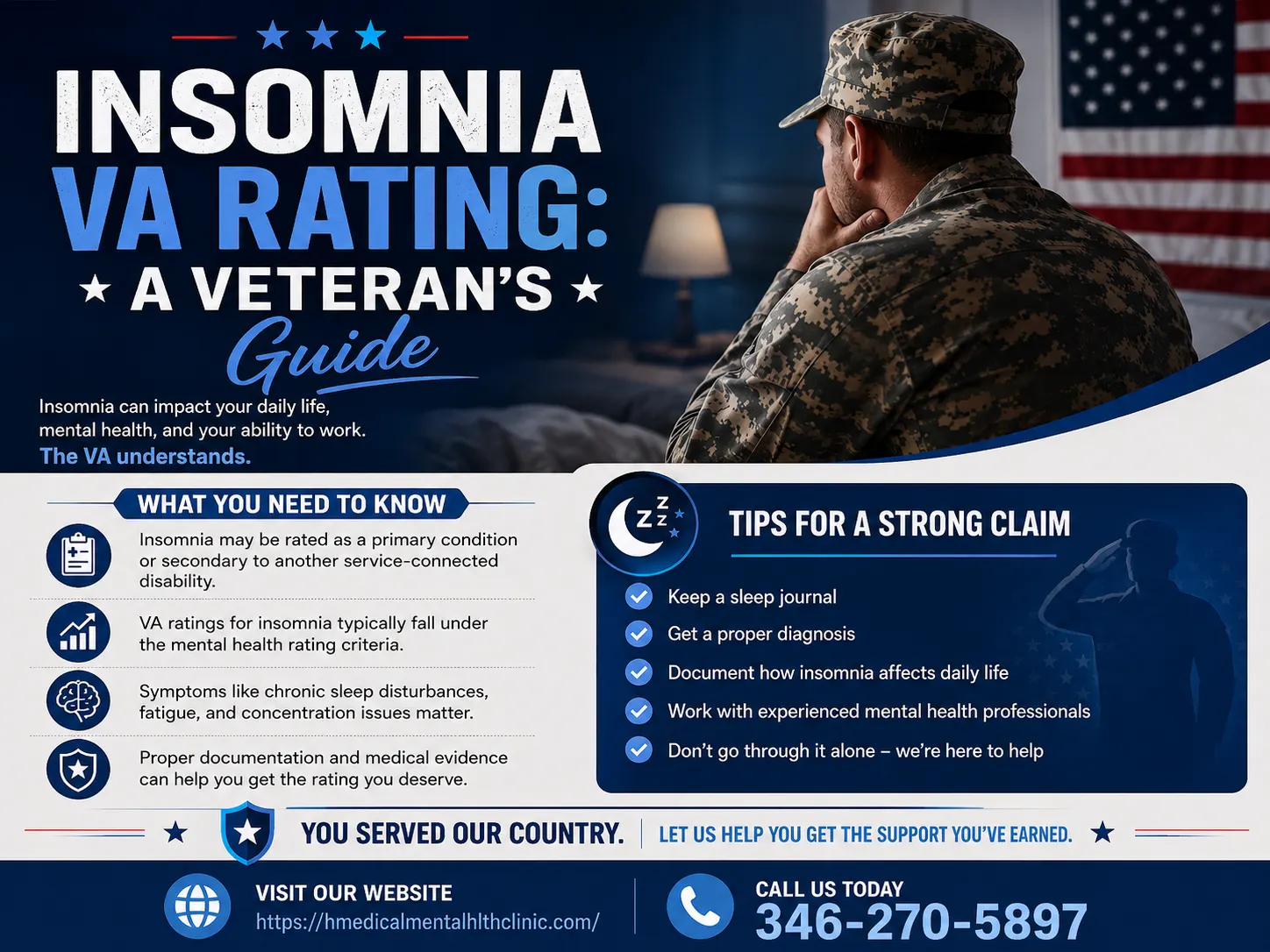
Insomnia VA Rating: A Veteran’s Guide
When you go without sleep for a long time, it doesn't just drain your energy; it damages your memory, your ability to focus, and your physical and emotional health. Military veterans typically have sleep problems related to their active-duty experiences, such as battle stress, shift work, chronic pain, or mental health issues. Obtaining a service-connected insomnia VA rating provides access to monthly compensation and treatment, but navigating the rating standards requires a clear understanding of how the Department of Veterans Affairs examines sleep problems.
The VA doesn’t often consider insomnia as a stand-alone issue. The rating method is a set of regulations, medical evidence, and diagnosis criteria to determine a disability percentage anywhere from 0%-100%. Know the rules, and you can submit a well-documented claim that accurately describes the effects of serious sleep loss on your daily life and ability to work.
Key Takeaways
- Mental Health Evaluation Framework: The VA evaluates insomnia under 38 CFR § 4.130 (the Rating Schedule for Mental Disorders), not as a physical or respiratory sleep problem such as sleep apnea.
- The Pyramiding Rule: If you have the same symptoms for sleeplessness and another mental health illness (such as PTSD or depression), you cannot be rated for both separately.
- Secondary Service Connection: Insomnia is typically claimed as secondary to service-connected chronic pain, tinnitus, or underlying psychological conditions.
- Why Evidence Matters: A formal medical diagnosis, a comprehensive nexus letter relating the ailment to service, and consistent treatment records are the bedrock of a successful claim.
How Does the VA Rate a Sleep Disorder Under Mental Health Disorders?
Insomnia disorder is rated under Diagnostic Code 9433 in the VA Schedule for Rating Disabilities. The VA considers insomnia to be a mental condition, but a layperson would consider it a sleep-wake disorder or a physical issue. This strategy acknowledges the strong link between chronic sleep deprivation and the health of the nervous system and mental and emotional well-being.
When rating officers are reviewing an insomnia claim, they are not just looking at how many hours you sleep at Night. They look at the entire effect on your work and social life. A veteran who is mildly fatigued, but who continues to work full time and maintain healthy personal relationships, will be rated lower than a veteran who makes debilitating errors at work and who has impaired memory and emotional instability due to chronic sleep deprivation.
Because insomnia is regarded as a mental health illness, the severity criteria parallel those used for post-traumatic stress disorder (PTSD), major depressive disorder, and generalized anxiety therapy Houston. The focus remains on functional impairment in both home and work environments.
What Is the Specific 38 CFR § 4.130 Rating Criteria for Insomnia?
The official legal guide used to decide your percentage tier is found in the Code of Federal Regulations under 38 CFR § 4.130. Raters use these specific verbal descriptions to evaluate your claim file.
The VA evaluates all conditions under this schedule at specific tiers:
- VA Disability Rating 100%: Total occupational and social impairment. The law looks for extreme clinical indicators, such as complete disorientation to time or place, gross impairment in thought processes or communication, a persistent danger of hurting oneself or others, or an intermittent inability to perform the basic activities of daily living (such as maintaining personal hygiene).
- 70% Rating: Severe social and occupational impairment. This tier matches veterans who experience an intermittent inability to handle workplace tasks, suicidal ideation, obsessive rituals, and near-continuous panic or depression that harms their ability to function independently. At this level, sleep loss causes a massive, destructive strain on your daily life.
- 50% Rating: Reduced reliability and productivity. Symptoms include panic attacks occurring more than once a week, short-term or long-term memory lapses, impairment of judgment, and disturbances of motivation and mood that interfere with your daily work efficiency.
- 30% Rating: Mild, manageable disruption. This tier covers an occasional decrease in work efficiency or intermittent periods of inability to perform occupational tasks. You function satisfactorily on most normal days, but you deal with chronic sleep impairment, weekly anxiety, or mild memory loss.
- 10% Rating: Mild or transient symptoms that cause slight impairment during periods of intense, real-world stress, which are mostly controlled by medication.
How Does the Pyramiding Rule Affect Your Insomnia VA Rating?
The VA has a policy, set forth under 38 CFR § 4.14, that it does not “pyramid”—that is, award multiple disability ratings for the same symptom caused by the same impairment or overlapping disorders. Insomnia is one of the mental health requirements, and there are rules that apply to a veteran having more than one psychiatric diagnosis.
So, if you have a 50% service-connected rating for PTSD, and then you file for an insomnia rating, the VA will typically aggregate the symptoms into one mental health assessment, rather than giving you two separate evaluations. For example, the VA considers insomnia to be a symptom of PTSD and not a stand-alone rating block if your sleep loss is due to PTSD nightmares.
The only exception to this rule is when the insomnia causes specific functional impairment that is not overlapping or when it is a service-connected disorder in and of itself as a primary ailment without any additional psychiatric diagnoses. When there is more than one condition, the VA considers all the symptoms of the psychiatric disorders together and gives one percentage grade that represents the overall combined occupational and social impairment.
Can I get a secondary service connection for insomnia?
To establish a primary service connection, your evidence must show that active duty directly caused your sleeplessness. But many veterans, years after discharge, suffer from debilitating sleep disturbances as a subsequent condition to a service-connected disability.
To establish a secondary service connection for insomnia, you must provide three basic elements:
- A main service-connected disability recognized by VA.
- Clinical definition of insomnia diagnosis.
- Medical Evidence (Nexus Letter) Connecting the Primary Service-Connected Condition to the Onset of Insomnia.
Common primary disorders associated with secondary Insomnia
- Chronic Physical Pain: Back ailments, nerve damage, or joint discomfort can keep you from getting restful sleep, often leading to chronic insomnia.
- Tinnitus: Constant ringing or buzzing in the ears makes it hard to fall asleep and disrupts normal sleep patterns.
- Mental Health Conditions: Anxiety, sadness, and PTSD usually produce hyperarousal, nocturnal terrors, and racing thoughts that interfere with sleep habits. These symptoms are generally related to each other, and specific mental health treatment Houston and organized mental health care in Houston can help to reset healthier sleep patterns.
What Medical Documentation Is Required for Claims?
Your VA claim for insomnia rating hinges on the quality and consistency of your medical data. The VA depends on objective clinical findings as opposed to subjective reports alone.
Essential Claim Documents
- Official Medical Diagnosis: A formal diagnosis by a trained medical practitioner or licensed mental health professional that meets DSM-5 criteria.
- Detailed Medical Records: Records of ongoing treatment, Records of therapy, and histories of prescriptions proving long-term management of sleep deprivation.
- Medical Nexus Opinion: A written opinion from a trained physician outlining the nexus between your sleeplessness and military service, or that it is secondary to another service-connected ailment.
- Sleep Logs and Personal Statements: Personal records of sleep patterns, frequency of awakening, daily weariness, and direct influence on your personal and professional life.
- Buddy Statements (VA Form 20-10210): Written statements from your spouses, family members, or other service members that outline changes they have noticed in your sleep patterns, mood, and everyday functioning.
Why Is Mental Health Clinic the Most Impactful Partner for Your VA Benefits Journey?
Applying for VA benefits for a sleep issue can be daunting, especially if you’re coping with the debilitating symptoms of a sleep deficit. Working with trained mental health professionals, you may be sure that your issue will be thoroughly evaluated, recorded, and presented with the clinical rigor that the VA expects.
Veteran clinicians know how to document psychiatric symptoms according to the criteria in 38 CFR § 4.130. Specialist clinician extensive clinical assessments resulting in diagnostic clarity, full functional impact assessments, and detailed nexus declarations.
The Houston-based specialized supplier of comprehensive mental health services Houston, bridges the gap between medical treatment and claim documentation. Veterans submit claims supported by sound clinical evidence following systematic and well-defined assessments of occupational and social constraints, minimizing the chance of delays due to ambiguous or inadequate medical evidence.
What Should You Expect from a VA C&P Exam for Sleep Loss?
When you file a claim for an insomnia VA rating, the VA usually will schedule you for a Compensation and Pension (C&P) assessment. A VA physician or contracted medical expert will perform this examination to establish the severity of your disease and determine whether your service caused it.
During your exam, the examiner will study your medical history and fill out a Disability Benefits Questionnaire (DBQ) for Mental Disorders. Be ready for queries on a range of operational topics:
- Sleep Quality and Patterns: How long it takes you to get to sleep, how often you wake up during the night, and how refreshed you feel when you get up.
- Occupational Impact: How weariness impacts your ability to work, including your work performance, attendance, concentration, relationships with coworkers, and safety.
- Social Impact: How sleep loss impacts your mood, your relationships with family members, your ability to control your emotions, and your involvement in social events.
- Treatment History: Medications prescribed, therapies attempted, and general success in controlling symptoms.
Be honest and upfront on your C&P exam. Describe your worst days rather than summarizing how you feel on a good day, as the VA demands an accurate representation of your overall disability load.
Frequently Asked Questions
Can a veteran get separate ratings for insomnia and depression?
Usually not. Both insomnia and depression fall under the VA’s General Rating Formula for Mental Disorders (38 CFR § 4.130). Because the VA prohibits anti-pyramiding, it rates the symptoms of both conditions together to determine a single mental health rating that best reflects your overall disability.
What is TDIU and how can it help my sleep disorder claim?
Total Disability Based on Individual Unemployability (TDIU): Even if your combined rating is less than 100%, the VA may still compensate you at the 100% rate if your service-connected disabilities prevent you from maintaining substantially gainful employment. If you have severe insomnia and fatigue that prevents you from holding a job, TDIU can help you reach optimum benefit levels if you have serious cognitive impairment.
Can I file for sleeplessness years after leaving active duty?
Yes. There is no time limit for filing a claim of service connection. But if you file years after discharge, you need convincing medical evidence showing the ailment started during service, or was secondarily related to an existing service-connected disability or sickness. With time, professional mental health therapy in Houston can help you create a detailed record of treatment.
What cities and regions do mental health clinics serve?
If you are seeking a trusted mental health clinic Houston TX, care is readily available across the broader metropolitan area. Furthermore, through current telemedicine mental health in Texas, veterans across the entire state can obtain examinations, therapy, and specialized claim documentation virtually without needing to visit to a physical location.