
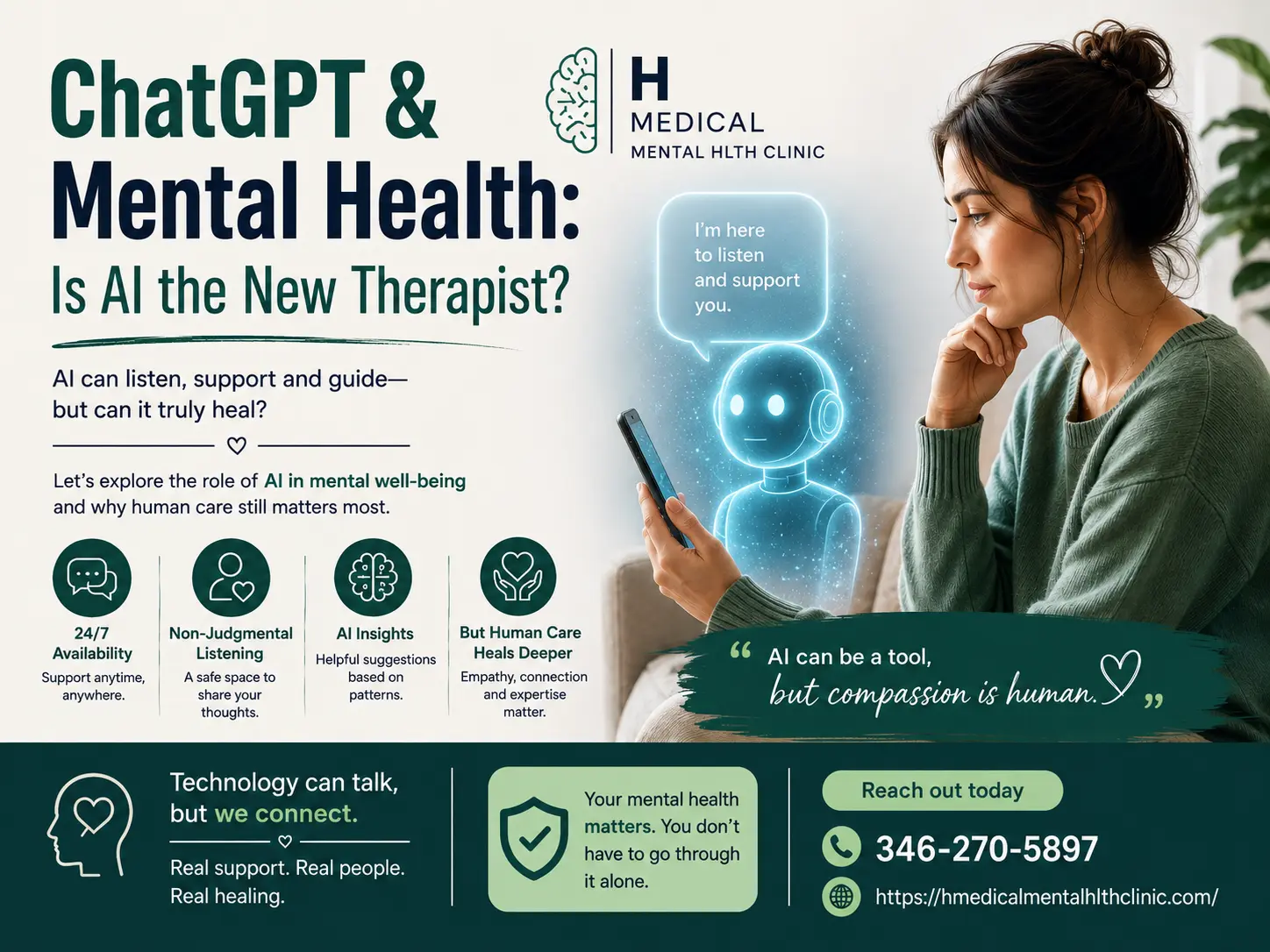
ChatGPT & Mental Health: Is AI the New Therapist?
Mental health support is entering a period of transition with millions of people turning to huge language models for individualized counsel, self-reflection, and emotional support. Generative artificial intelligence systems like ChatGPT allow immediate and low-barrier access to interaction, and many have questioned if it is possible for ChatGPT and mental health management to intersect, or if conversational models may replace human therapists altogether.
AI can evaluate material and help organize thinking and provide organized approaches based on patterns of cognitive behavioral frameworks, but it does not have true empathy, clinical judgment, and moral accountability. AI models are trained on linguistic data, not lived human experience. They are thus clever text tools, not medical practitioners.
Is ChatGPT Safe for Mental Health? (Pros, Cons, and Risks)
For some, the concept of texting an AI with your deepest fears might sound odd, but it does have some evident advantages. ChatGPT is free or very low-cost and available 24/7, and it is a completely judgment-free zone. An AI chatbot can offer immediate grounding techniques or deep breathing exercises for someone having a panic attack at 2:00 a.m.
Ironically, artificial intelligence can sometimes adhere to therapeutic models like Cognitive Behavioural Therapy (CBT) more rigidly than some human therapists do. It doesn’t grow tired, frustrated, or distracted as it operates on structured data and algorithms. It can lead a user through a CBT worksheet, or aid in reframing negative beliefs, all with clinical precision.
But there are substantial dangers to using ChatGPT for mental wellness.
Underestimating serious risks: AI algorithms can’t read between the lines. If a user says something like “I feel hopeless” (without further elaboration), a human therapist can detect subtle signs, tone of voice, body language, etc., and assess suicide risk. ChatGPT might just provide a generic coping strategy, totally underestimating a life-threatening scenario.
Hallucinations and bad guidance: Artificial intelligence may confidently make up false or damaging information. In mental health, incorrect advice can make anxiety or trauma worse.
Data privacy concerns: Entering sensitive health data into a third-party app raises big red flags about data protection.
AI Therapy vs. Real Therapy: A Direct Comparison
The distinctions between AI conversation tools and a licensed professional are much more than a screen away.
First and foremost is the absence of human empathy. ChatGPT can say things like, “I’m sorry you’re feeling that way,” but it doesn’t truly feel anything. The real therapy is the therapeutic alliance—the profound personal connection and trust between patient and provider. Clinical research generally cites this link as the most important aspect in successful mental health treatment.
Understanding what is clinical mental health counseling, professionals are constrained by ethical rules, HIPAA regulations, and licensing boards. ChatGPT is not obligated to care for your well-being. A qualified psychiatric provider can also prescribe and monitor psychotropic drugs, order lab tests, and coordinate a thorough treatment plan—all things that are completely outside the realm of artificial intelligence.
How AI and Human Therapy Can Complement Each Other
Instead of thinking about AI as a replacement for treatment, it’s a lot more useful to consider it as an additional tool. Used properly, ChatGPT can help fill some of the gaps in the mental health treatment journey.
For example, you might use AI to journal between therapy sessions. You can have an AI help you identify the cognitive distortions in your journal entry before you bring them up with your therapist to explore in more depth. Artificial intelligence can also help you practice conversations about setting boundaries via role-play, or give you a list of self-care activities tailored to your interests.
The idea is to treat AI like an interactive self-help book, not as a replacement for affordable psychiatric therapy.
Best Practices for Using AI Safely
Should you choose to use AI as part of your mental wellness routine, it’s important to set clear boundaries.
Don’t use AI in emergencies: If you’re in crisis, experiencing suicidal ideation, or actively feeling unsafe, don’t use AI at all. Call 911, contact a crisis lifeline, or go to a specialized urgent care center.
Your privacy is important: Please do not disclose personally identifiable information, information about specific trauma, or your medical history with a public AI model.
Check the tip: If an AI advises a new coping method or supplement, be sure to run it by your healthcare professional before trying it.
Keep people in the loop: Make sure you have a real-world support system – friends, family, and medical professionals – who know what you are going through.
Your Next Steps on Your Mental Health Journey
If you are looking for dedicated care in Texas, visiting a specialized Houston medical mental health clinic provides access to comprehensive, human-led psychiatric evaluations and treatment. Working with an experienced practitioner like (Lucas Egebe, PMHNP-BC, DNP) ensures your treatment is tailored specifically to your needs—from therapy to medication management.
If you are experiencing persistent anxiety, mood fluctuations, relationship difficulties, or emotional pain, you may choose to contact a licensed expert. Schedule an appointment or call us at (346) 270-5897 to get fast, compassionate care when it matters most.
Frequently Asked Questions
Can ChatGPT diagnose mental health conditions?
No. I can’t diagnose mental health disorders. It has no medical training, no clinical intuition, no diagnostic power. It anticipates patterns of words depending on what it has been trained on. If used as a diagnostic tool, this can lead to incorrect or misleading health claims.
Will my mental health conversations with ChatGPT be 100% private?
No, not really. Chat records are saved on cloud servers on standard consumer AI platforms and may be inspected by human trainers or used to teach future versions of the software. These systems are not under the tight legal confidentiality safeguards offered by registered health providers (e.g., HIPAA).
What if I have an AI crisis?
If you or someone you know is having a mental health crisis, please immediately withdraw from the chatbot and contact local emergency or crisis services (e.g., call or text 988 in the US and Canada). Artificial intelligence can’t mobilize emergency response teams or give real-time human intervention.
Why does ChatGPT feel so empathetic when I go to it?
Training language models on enormous volumes of human interaction allows them to mimic sympathetic, polite, and encouraging responses—a concept called "deceptive empathy." While these reactions provide instant validation, they stem from programmed language norms instead of true emotional comprehension or concern.
Where can I find affordable therapy and professional psychiatric care in Houston?
If you are seeking low cost therapy Houston options or an affordable psychiatrist near me, local outpatient mental health clinics offer accessible, human-led psychiatric services. Specialized providers offer comprehensive care including therapy, medication management, and specialized medical evaluations.