
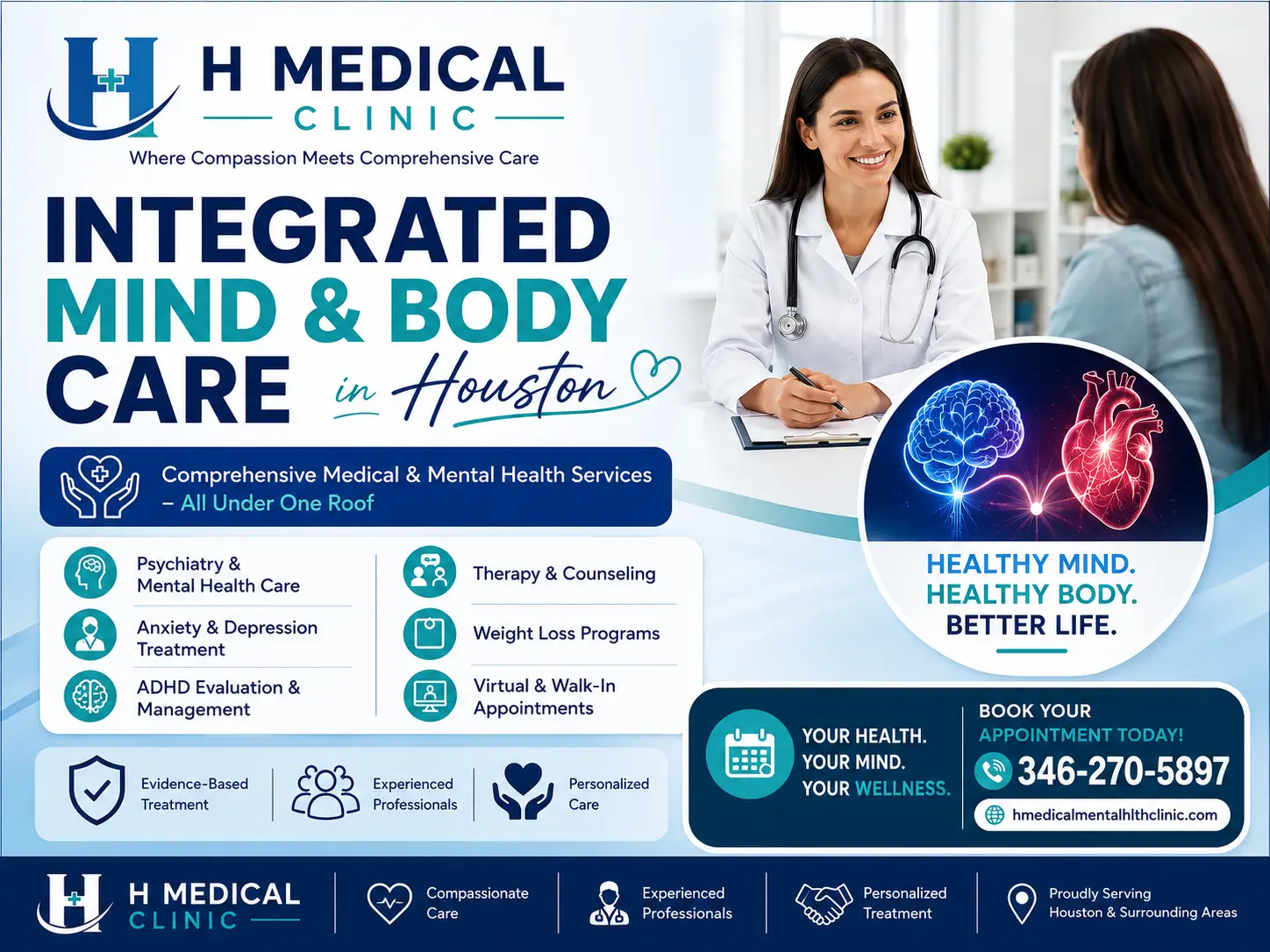
Integrated Mind & Body Care in Houston | H Medical Clinic
Treatment for physical health has long been separating from mental health treatment in the United States, to be found on opposite ends of town. Recent medical studies however show that a person's physical and mental health are inextricably linked. In Houston, patients can now have access to holistic care and co-managed therapy within one practice, providing care for the whole person instead of just the symptoms.
So, what is Integrated Mind & Body Care in Houston, TX?
Integrated mind and body care is a system for delivering healthcare that integrates primary medical care, psychiatric/psychological care and treatment in one clinical setting. Instead of physical and mental health services being separate, the treatment team collaborates to provide holistic care and ensure patients receive care and services in a single place to provide whole-person healing and better long-term results. This approach at H Medical & Mental Health Clinic is a continuum linking the fields of internal medicine and behavioral health. Having primary care, psychiatric and licensed therapist care providers in the same care system provides patients with the advantages of consistent communication, a unified treatment plan and a comprehensive diagnostic assessment.
Integrated Healthcare Key Components:
A combined approach to diagnostic screenings includes both physical symptoms (e.g., hypertension, chronic pain, hormone imbalances) and behavioral health indicators (e.g., anxiety, depression, burnout).
- Shared Electronic Health Records (EHR): Instant provider-to-provider communication, which allows both medical and mental health service providers to review medication changes, lifestyle therapies.
- On-Site Warm Handoffs: When primary care consultation points to secondary psychological stress, patients are immediately introduced to an in-house mental health professional without having to wait for a referral to be made after months.
Why is an “under one roof” approach to integrated medical and mental health services a preferred approach?
A single system of care at one facility provides better treatment adherence, and simplifies administration and helps avoid disjointed care. Patients benefit from being able to receive both physical and therapy services and psychiatric medication management in one place, and providers work together closely to ensure optimal safety of their patients and health outcomes.
- Higher Referral Success: Integrated care increases referral completion to 75-80% (versus 35-50% in traditional referrals) due to co-management of mental health services.
- Reduce Medication Risk: Coordinated use of Shared Electronic Health Record (EHR) tracking of medications by medical and psychiatric teams greatly reduces the risk of adverse medication interactions.
- Improved Care Access: Patients are evaluated the same day or same week, avoiding the typical 6 to 12-week turnaround time that is often seen in conventional referrals.
- Better Chronic Disease Control: Stress and physical health are treated together, and chronic conditions (such as diabetes, chronic pain, heart disease, etc.) are 30% better.
- Single Point of Contact – fewer visits are missed, and overall satisfaction is higher.
Industry Benchmark: The American Psychological Association (APA) found that the integrated primary and behavioral health care models lower healthcare utilization costs by 10% to 15%, and decrease emergency room utilization for complex chronic patients.
What is Integrated Care and how is it done?
The process of integrated care consists of four steps: a comprehensive intake assessment, collaborative care planning, working with a medical-behavioral intervention, and ongoing monitoring. This will help to ensure that all treatment decisions take into account both physical physiology and emotional health. This is how an average patient experiences H Medical & Mental Health Clinic:
- Detailed Dual Screening Intake: On the first visit, clinicians review important physical parameters as well as standardized psychological questionnaires (including the PHQ-9 for depression, and the GAD-7 for anxiety).
- Inter-Provider Consultation: Together, your primary care clinician and psychiatric provider read the lab tests, medical history and mental health evaluations to develop a comprehensive treatment plan.
- Targeted Concurrent Interventions: Physical health management (chronic illness, preventative screening) is planned to be concurrent with targeted behavioral therapies or psychiatric care.
- Cross-Monitored Medication Management: Prescriptions are thoroughly reviewed and monitored in both disciplines to minimize drug interactions, optimize dosages and manage potential side effects comprehensively.
- Continuous Care Adjustment: Follow-up visits are regular and are used to monitor physical biomarkers (such as blood pressure, blood glucose, inflammation markers) and emotional well-being markers, which is used to tailor your treatment as you go.
What are the best conditions for Integrated Mind and Body Care?
The most successful integrated, mind and body care situations are chronic medical conditions that are linked to elevated psychological co-morbidity, such as diabetes, cardiovascular disease, chronic pain, fibromyalgia, autoimmune disorders and high levels of worry or depression. If the body isn't treated to ease the psychological stress, recovery may stall.
- Chronic Pain & Musculoskeletal Issues: Ongoing physical pain triggers nervous system stress responses that can intensify the sense of pain. Joint medical and therapeutic management breaks this cycle.
- Metabolic & Endocrine Disorders: Mood disorders such as Type 2 Diabetes and thyroid disorders affect mood control and stress hormones directly affect blood glucose.
- Cardiovascular Health & Stress Management: High blood pressure and heart disease are closely related to stress and anxiety. Co-managed interventions take into account both cardiovascular and stress reduction.
- Treatment-Resistant Mood Disorders: When mental health symptoms don't respond to therapy alone, underpinning physical issues (such as gut health, systemic inflammation, and vitamin deficiencies) can open the pathway to improvement in people with treatment-resistant mood disorders.
Frequently Asked Questions (FAQ)
What are the differences between primary care and integrated mind & body care?
Primary care is mainly concerned with the physical illness, preventive health and basic management of medicine. Integrated mind and body care increases the scope of primary care, bringing psychiatric and psychological services right into the medical team, to treat physical and emotional health together.
Can I see a therapist and a primary care doctor in the same visit?
Yes. H Medical & Mental Health Clinic offers visits with a medical evaluation and behavioral health consultation in the same appointment block or streamlined and efficient back-to-back scheduling under one roof.
Are integrated medical and behavioral healthcare covered by insurance?
Most health insurance plans include coverage for primary care medical services and mental health care. Integrated care takes place in accordance with established medical coding and billing standards, thus processing services through the usual medical and behavioral health benefits.
How can I get an integrated care assessment in Houston, TX?
Appointments can be scheduled directly on the H Medical & Mental Health Clinic Website or by calling our clinical administrative team in Houston to schedule your first complete health intake.